THE AI INNOVATION SYSTEM
Design AI for value. Turn AI potential into outcomes.
Identify where AI can create meaningful value, prioritise the right opportunities, and build the capabilities needed to deliver them.
For ambitious leaders and innovation teams that want to realise the potential of AI.
• Taught at business schools • Road tested with corporate leaders
Most AI projects fail
Not for lack of ideas or effort. The same three failures show up again and again, in companies of every size.
No link to value
Workshops end with a wall of ideas. No idea is tied to a customer or an operating gain, so no idea gets backed.
Pilots that stall
The pilot works, then stops. It was never built to reach the business, so nobody owns it and nothing scales.
Unplanned work
The money is committed before anyone asks what has to change. The barriers show up later, when they cost more to fix.
THE SYSTEM
Find the Value. Connect the Change. Know the Work.
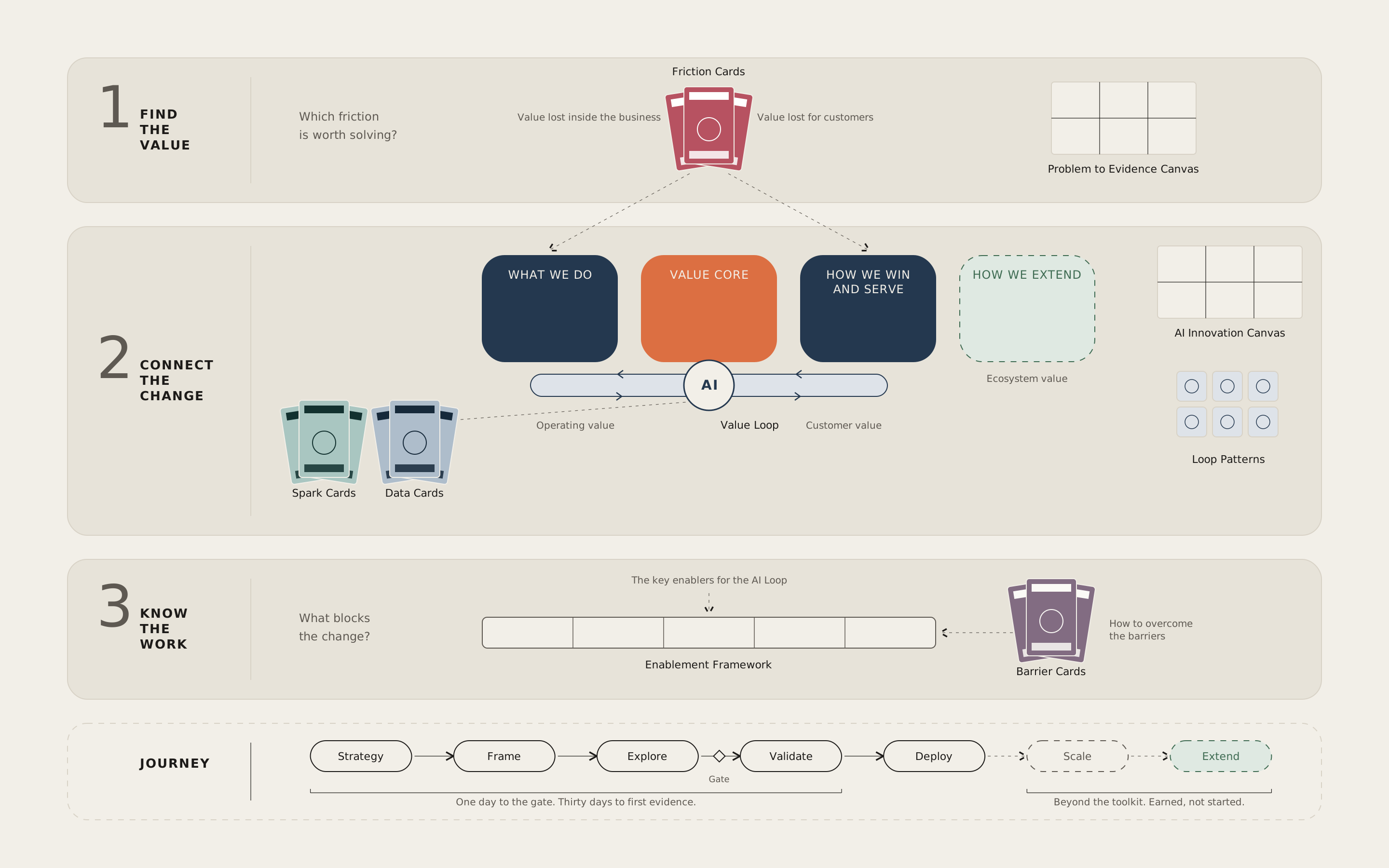
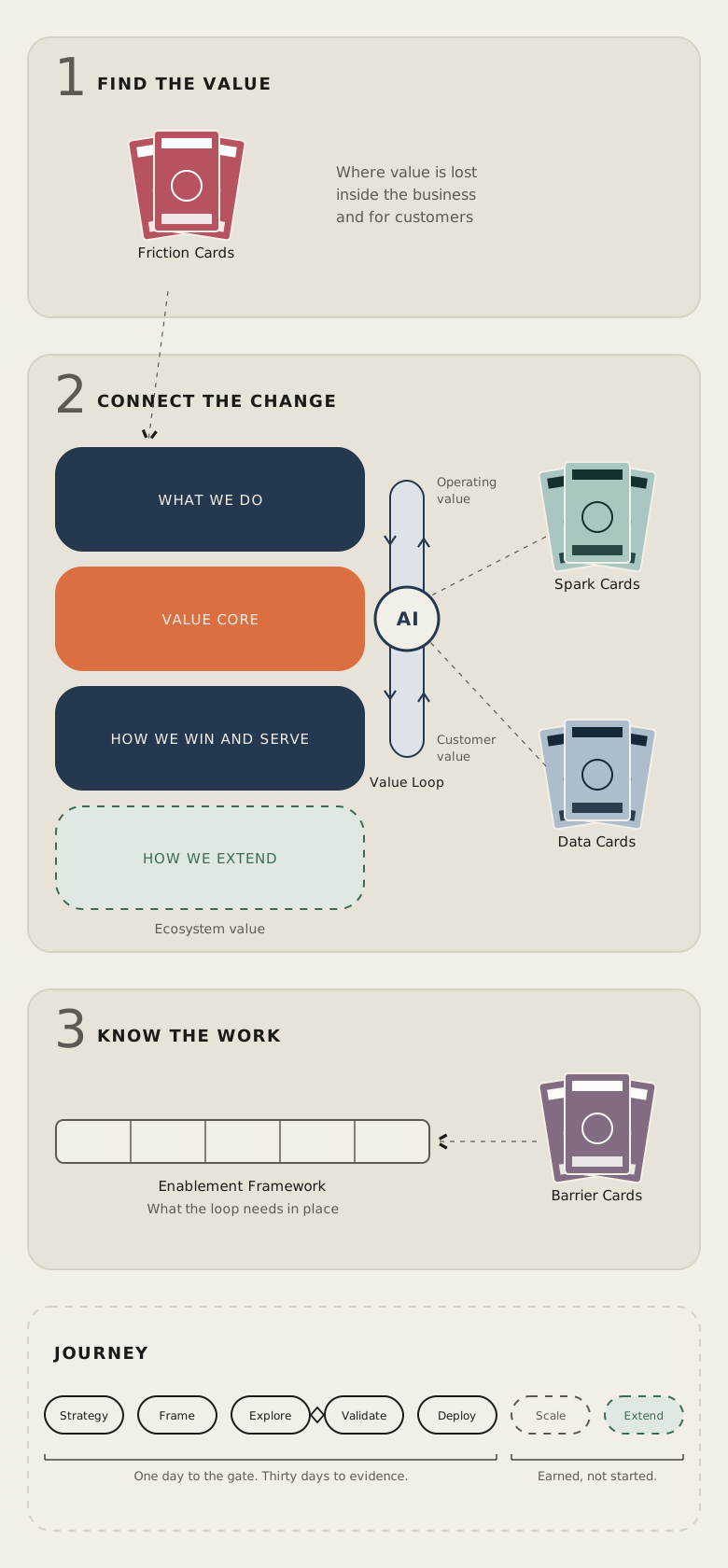
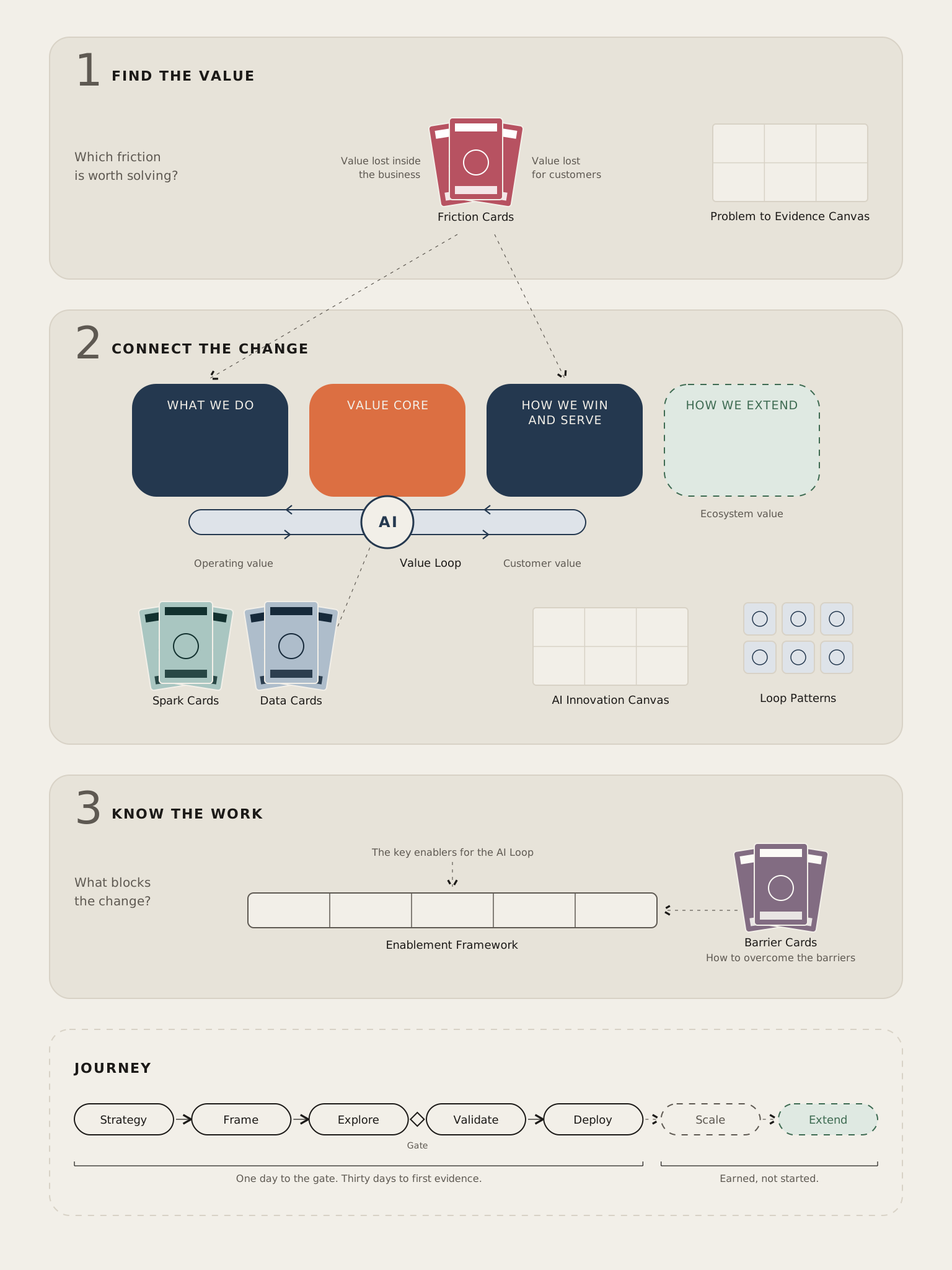
Most teams end an AI workshop with a wall of ideas and no way to choose. This system ends with a decision. You leave knowing which problem is worth solving, what AI will do about it, what data it needs, and what has to change for it to work. The map below shows how those four answers connect.
1
Find the Value
Name the friction. Prove where value is lost inside the business and for customers.
2
Connect the Change
Join what you do to how you win and serve. AI sits on the loop between them.
3
Know the Work
See what must be in place before the loop runs. Name each barrier and how to clear it.
THE JOUNEY
Seven stages. One direction.
Innovation is about reducing risk and improving outcomes. Each stage hands to the next.
Strategy sets the aim. Explore proves the problem and builds the ideas. Frame chooses one and names the work. Validate tests it. Deploy makes it real.
Stage 01
Strategy
Set the intent, the ambition and assess risk before any idea.
Stage 02
Explore
Find where value is lost. Prove it. Build AI ideas from it.
Stage 03
Frame
Assess and rank the ideas. Choose one. Name the work to deliver it.
Stage 04
Validate
Build the smallest version. Test it. Evidence in thirty days.
Stage 05
Deploy
Clear the barriers. Make the loop live in one place.
Stage 06
Scale
Take the proven loop to the repeatable model.
Stage 07
Extend
Open a proven capability to partners.
Put the system against a live decision.
1 FIND THE VALUE – FRICTION CARDS
Common problems you’ll recognise
Don’t start from a blank page.
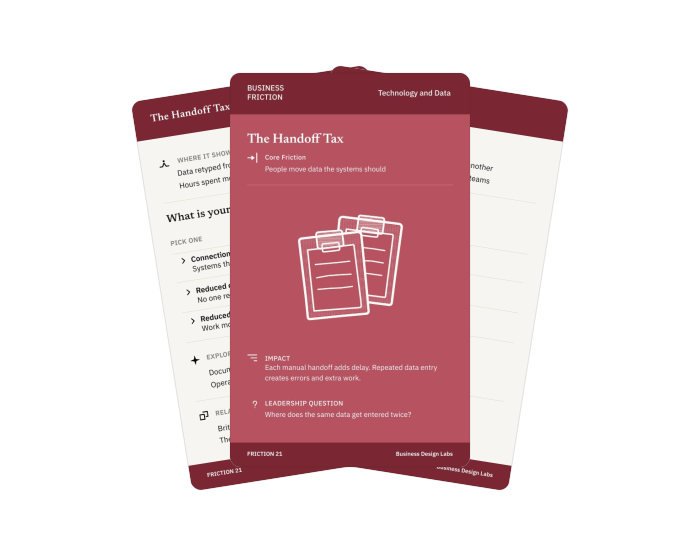
These are the top problems organisations face, drawn from research. The friction cards name the most common ways value is lost. Each card states a problem and links it to the value of solving it. Find a problem in the deck you want to solve.
Use the friction cards to spot where AI can add value.
2 CONNECT THE CHANGE · THE FRAMEWORK
See where your advantage is built
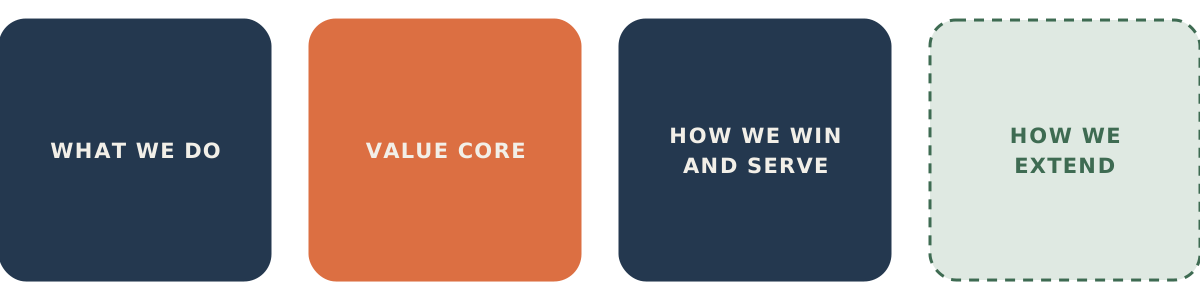
Every business runs on two engines around one Value Core: what you do, and how you win and serve. The framework puts them on a single view. You see where your advantage comes from, where AI can strengthen it, and where value leaks.

2 CONNECT THE CHANGE · THREE LEVELS
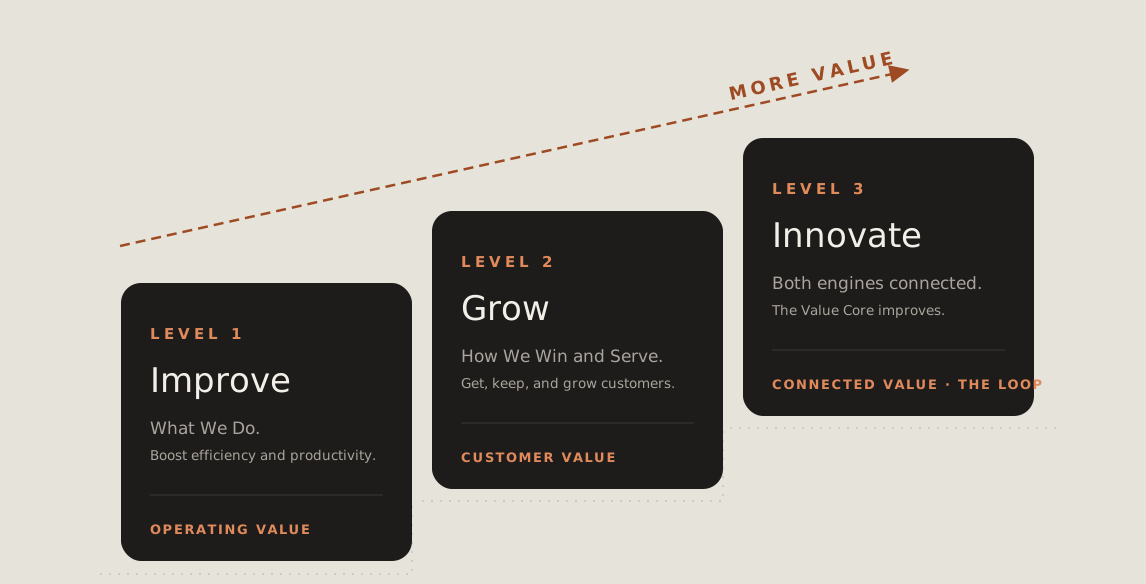
Three levels of innovation
Efficiency, growth, or a position competitors cannot copy. Choose where to aim.
2 CONNECT THE CHANGE · THE VALUE LOOP
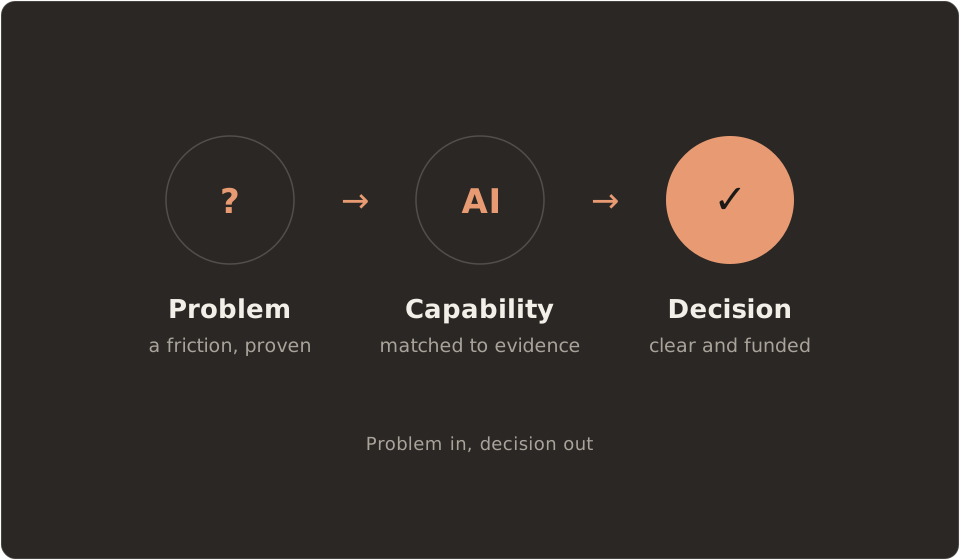
Find the AI worth investing in
The Value Loop joins what you do to how you win and serve, with AI in the middle. It shows you where AI creates real value. Every opportunity is grounded in evidence, not opinion.
2 CONNECT THE CHANGE · SPARK AND DATA CARDS
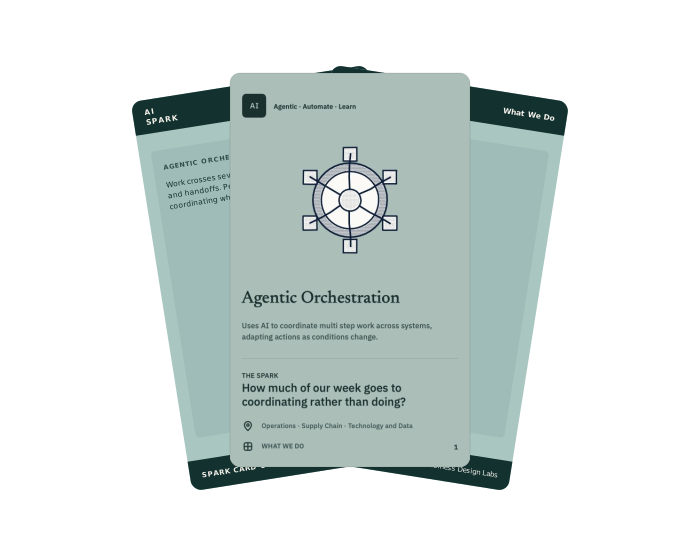
Start with proven ideas
Spark cards give teams ready made ways to use AI. Teams explore the options, build on the strongest, and shape them into practical ideas.
Data cards sit beside them. They show which data each idea needs, and whether the business already holds it.
3 KNOW THE WORK · THE ENABLEMENT FRAMEWORK
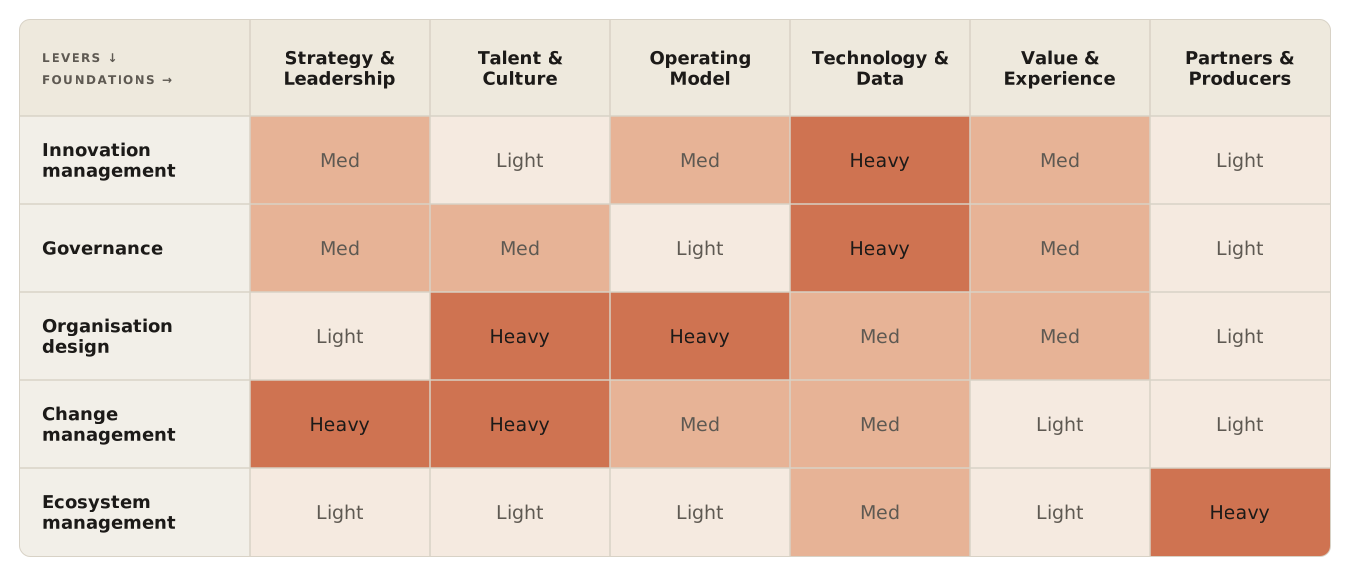
Overcome the implementation barriers
Most AI ideas fail in delivery, not in design. The Enablement Framework shows what your organisation must change to make an idea work. Teams map the barriers early, plan for them, and create momentum.
3 KNOW THE WORK · BARRIER CARDS
Know how to clear each barrier
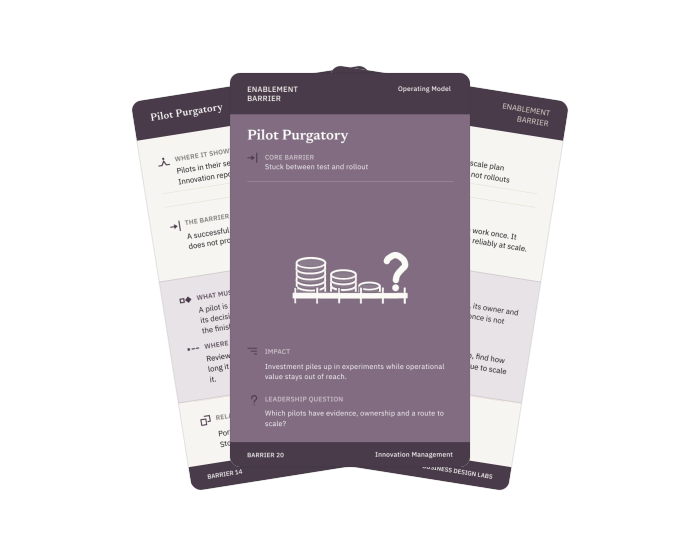
The framework names the barriers. The barrier cards show you how to clear them. Each card gives a clear action for a common barrier, so implementation doesn’t stall.
ONE CONNECTED SYSTEM
One system, not a pile of tools
Each part connects to the next. A friction becomes an idea. An idea becomes a loop. A loop becomes real change, with the work to deliver it named before you commit.
1 · Find the Value
Explore
Friction cards
Problem to Evidence Canvas
→
↓
2 · Connect the Change
Explore and Frame
The Framework
The Value Loop
Spark and Data Cards
AI Innovation Canvas
→
↓
3 · Know the Work
Frame
Enablement Framework
Barrier Cards
Enablement Plan
AI Business Case Canvas
THE FINAL PIECE · HOW WE EXTEND
Then extend beyond the business
Firms rarely go from zero to ecosystem. They prove a loop, scale it, and only then open it up. The fourth engine, How We Extend, is where a proven capability is offered to partners and a wider market.
The system names this stage last for a reason. It is earned, not started. Once the loop runs at scale, the same map shows where ecosystem value sits and what it needs.
THE FINAL PIECE · HOW WE EXTEND
Start with the problem you are facing
Tell us the problem you are working on. We will show you how the system moves it forward.
• Taught at Cambridge Judge Business School • Road tested with corporate leaders
Start a conversation →
A few short questions first. A reply within one working day. No pitch.