
The subscription business model focuses on providing ongoing access to products or services in exchange for a recurring fee.
Table of Contents
The Subscription Business Model
What is the Subscription Business Model?
The subscription business model offers customers ongoing access to a product or service in exchange for a recurring payment, typically on a monthly or annual basis.
The subscription model shifts the focus from one-time transactions to long-term relationships, providing customers with continuous value and convenience while generating a steady, predictable revenue stream for the business.
Why is the Subscription Business Model Pattern Important?
The subscription business model is important because it offers several key benefits for both businesses and customers:
- Predictable Revenue: Subscription-based models provide a stable, recurring revenue stream that makes it easier for businesses to forecast income and plan for growth.
- Increased Customer Lifetime Value: By fostering long-term relationships, subscription models encourage customer loyalty and increase the overall value each customer brings to the business over time.
- Reduced Customer Acquisition Costs: With a focus on customer retention, subscription businesses can often spend less on acquiring new customers, as satisfied subscribers are more likely to recommend the service to others.
Considerations Based On The Fish Model by Tien Tzuo
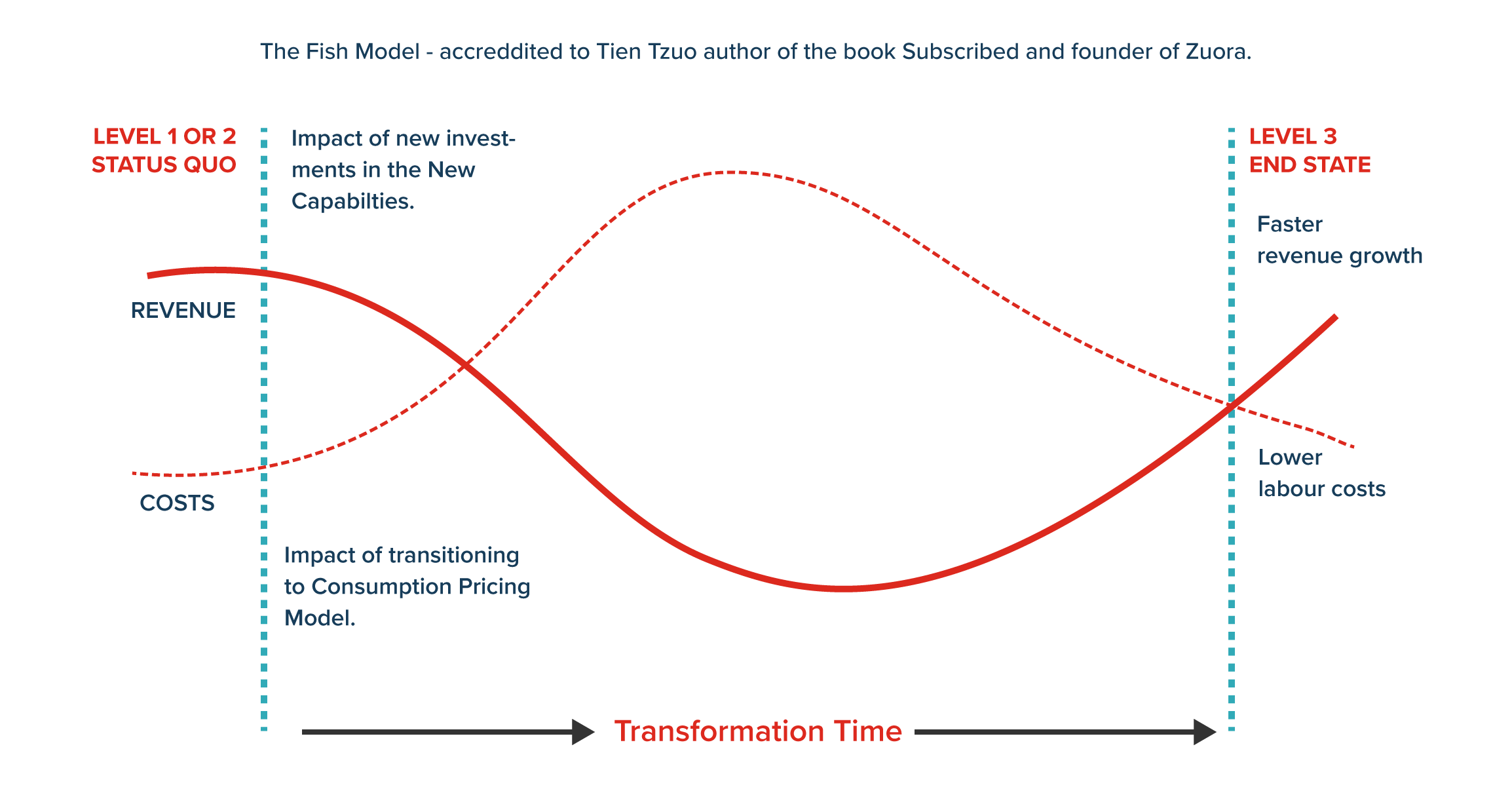
The Fish Model, conceptualised by Tien Tzuo, redefines the trajectory of customer relationships in the subscription business model. It underscores a paradigm shift from singular, transactional engagements to ongoing relationships, emphasizing the lifecycle from initial customer acquisition to long-term retention.
This model not only symbolises a strategic pivot to customer-centricity but also implicates significant operational adjustments, particularly in cash flow management, risk mitigation, and the realization of benefits. Here are the detailed implications and benefits of adopting the Fish Model in the subscription business model:
- Initial Sale as a Starting Point (The Fishs Head): The initial transaction marks the commencement of the customer journey. It’s less about the immediate financial gain and more about the potential for future revenue.
- Implication: The upfront revenue might be lower than in traditional sales models, affecting short-term cash flow.
- Benefit: Establishes the foundation for a long-term relationship, increasing the customer’s lifetime value.
- Sustained Revenue Over Time (The Fishs Body): The ongoing subscription fees constitute the body of the fish, symbolising continuous customer engagement and steady revenue streams.
- Implication: Requires robust systems for managing recurring payments, billing, and customer service, with a focus on quality and consistency to prevent churn.
- Benefit: Predictable, steady cash flow after the initial sale, reducing cash flow volatility and facilitating better financial planning.
- Expanding Revenue Opportunities: The model highlights opportunities for revenue expansion through upselling, cross-selling, and service enhancements within the ongoing relationship.
- Implication: Necessitates a deep understanding of customer needs and preferences, requiring investment in customer relationship management and data analytics.
- Benefit: Increases average revenue per user (ARPU) and enhances customer satisfaction through tailored offerings.
- Risk Mitigation through Customer Retention: Focusing on retention, the model implies a shift in how companies approach customer satisfaction and loyalty.
- Implication: The cost of acquiring new customers is significantly higher than retaining existing ones, demanding ongoing investment in customer success initiatives.
- Benefit: Lower customer acquisition costs over time and increased stability in revenue streams.
- Transformation in Company Culture and Operations: Embracing the Fish Model necessitates a cultural and operational shift towards customer-centricity, continuous innovation, and adaptability.
- Implication: May challenge traditional business models and require substantial changes in internal processes, team structures, and performance metrics.
- Benefit: Builds a resilient business model that is more aligned with evolving market demands and customer expectations, ensuring long-term competitiveness and growth.
The Fish Model, through its visual representation of the subscription business model, highlights the critical importance of nurturing customer relationships beyond the initial sale.
How to Implement the Subscription Business Model Pattern
To successfully implement the subscription business model pattern, businesses should follow these steps:
- Define the Value Proposition: Clearly articulate the ongoing value that subscribers will receive in exchange for their recurring payments, emphasizing convenience, cost savings, or access to exclusive content or features.
- Set Appropriate Pricing: Establish a pricing structure that aligns with the value provided and is sustainable for the business, considering factors such as market demand, competitor pricing, and operational costs.
- Optimize the Onboarding Process: Develop a smooth, user-friendly onboarding process that quickly demonstrates the value of the subscription and encourages long-term engagement.
- Focus on Retention: Implement strategies to keep subscribers engaged and satisfied, such as continually updating and improving the product or service, providing excellent customer support, and offering incentives for loyalty.
Subscription Model Examples

- Netflix: Netflix has disrupted the entertainment industry by offering subscribers access to a vast library of movies and TV shows for a monthly fee, providing convenience and value that has led to massive global growth. See Netflix business model.
- Spotify: Spotify’s music streaming service allows subscribers to access millions of songs on-demand, across multiple devices, for a monthly subscription fee, revolutionizing the way people consume music. See Spotify business model.
- Dollar Shave Club: Dollar Shave Club’s subscription-based model delivers high-quality razors and grooming products directly to customers’ doors on a monthly basis, providing convenience and cost savings compared to traditional retail options.
- Salesforce: Salesforce’s cloud-based customer relationship management (CRM) software is offered on a subscription basis, allowing businesses to access powerful tools and features without significant upfront costs or infrastructure investments. See Salesforce business model.
- Blue Apron: Blue Apron’s meal kit subscription service provides customers with pre-portioned ingredients and recipes delivered weekly, offering convenience and variety for home cooking.
The subscription business model pattern is now a common pricing strategy across multiple markets – from food to aerospace to video streaming.
By defining a clear value proposition, setting appropriate pricing, optimizing the onboarding process, and focusing on retention, you can successfully implement this model and enjoy the benefits of predictable revenue.
Related Posts and Business Model Patterns
- Subscription Business Model: 10 Amazing Industry Examples
- How To Grow A Subscription Business Model
- Platform as a Service Business Model
- Netflix Business Model: The $180 billion Company
- Pay Per Use Business Model
- Razor And Blade Business Model