
The Value Proposition Canvas helps you design an offer around what customers are trying to achieve, the problems they face and the outcomes they value. It makes the relationship between customer needs and your products or services visible, so you can identify gaps and test what matters before investing in a solution.
Developed by Alexander Osterwalder and colleagues at Strategyzer to complement the Business Model Canvas, the framework has two connected parts: a Customer Profile and a Value Map. Each has three components. The objective is to find and test a convincing fit between them.
Table of Contents
What Is the Value Proposition Canvas?

The six components at a glance
Customer Profile
- Customer jobs: What the customer is trying to get done.
- Pains: Obstacles, frustrations and risks that make the job difficult.
- Gains: Outcomes and benefits the customer seeks.
Value Map
- Products and services: What your organisation offers.
- Pain relievers: How the offer reduces important customer pains.
- Gain creators: How the offer produces desired customer outcomes.
Fit is a hypothesis, not a label you award yourself. A good canvas makes your assumptions explicit. Customer research and experiments determine whether those assumptions hold up.
How to use the canvas in ten steps
- Identify a specific customer segment and its jobs.
- Describe the gains customers seek.
- Identify pains, obstacles and risks.
- Prioritise the most important jobs, pains and gains.
- List the products and services you could offer.
- Specify how you would relieve important pains.
- Specify how you would create important gains.
- Check the fit between the two sides of the canvas.
- Develop and compare different value proposition concepts.
- Test the strongest propositions with real customers.
Free Value Proposition Canvas Template
DOWNLOAD FREE HIGH-QUALITY PRINTABLE PDF’s
Click to download free high-quality printable pdf’s of the Value Proposition Canvas.
width 3508 px x height 2480 px (300 dpi)
width 7016 px x height 4960 px (300 dpi)
width 14043 px x height 9933 px (300 dpi)
Get more templates by subscribing
Why Use the Value Proposition Canvas?
The canvas helps a team make decisions about customer value rather than starting with a list of product features. It can be useful for a new offer, an existing service that is losing relevance, or a market segment whose needs are not yet clear.
- Customer focus: describe the job and context before debating solutions.
- Priorities: distinguish severe pains and valuable gains from minor preferences.
- Better design decisions: identify where a proposed offer does not address what customers value.
- Testable assumptions: decide what evidence you need before committing resources.
Completing a canvas is not evidence of demand or product market fit. Its value comes from helping you formulate, compare and validate plausible propositions.
Value Proposition vs Brand Promise
A value proposition explains why a defined customer should choose an offer to do a particular job. A brand promise describes what people should consistently expect from a brand. Both matter, but they answer different questions.
The Six Components of the Value Proposition Canvas
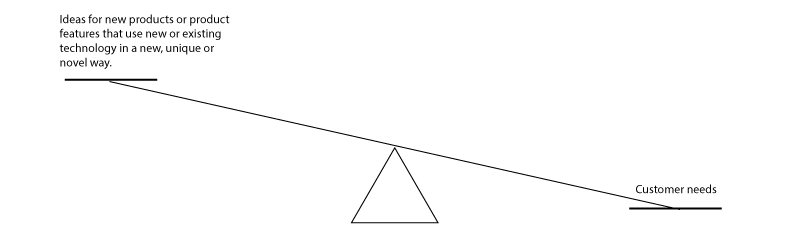
Most companies struggle with innovation because those responsible for conceptualizing, developing and evaluating ideas for new product/service offerings struggle with the “needs” side of the equation.
The customer profile is where you reframe your thinking and delve deeply into the ‘jobs’ that customers are trying to get done.
The Customer Profile
The customer profile section of the canvas has three sections:
- Customer Jobs: The things customers are trying to get done in their work or life.
- Gains: The outcomes and benefits your customers want to achieve.
- Pains: The annoyances and problems customers experience before, during or after trying to get a job done.
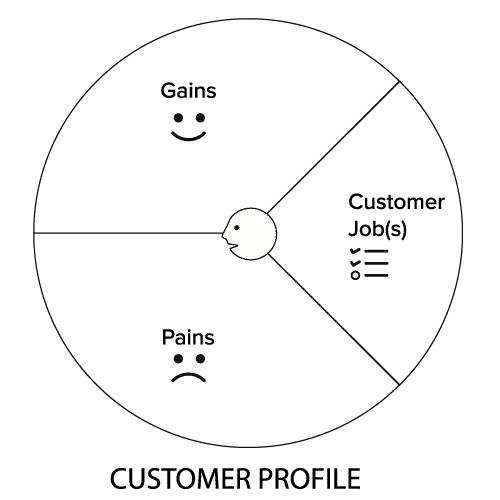
The principle is to use the Jobs To Be Done framework to create products or services that improve customers lives.
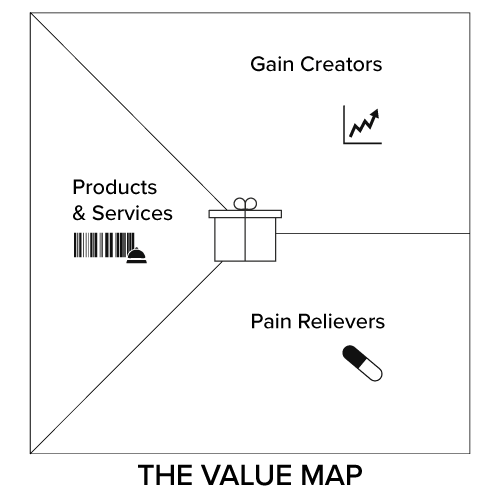
The Value Map
- Products and Services: A list of what you offer and may consist of service, product or both.
- Gain Creators: How your product or service creates customers gains – outcomes and benefits your customers expect.
- Pain Relievers: How you eliminate the things that annoy your customers.
Achieving Fit
The fit is achieved when your customer recognizes your value proposition and takes action. The goal of the process is to test and refine your value proposition until you get fit across three stages:
- Problem-solution fit: Is achieved when you have evidence of the jobs, pains and gains that customers care about. At this stage, you are developing the value proposition and validating your ideas.
- Product-market fit: Is achieved when you test your solution in the market and get traction of your value proposition directly with customers. Often this isn’t a perfect fit and you will need to pivot and refine your value proposition to improve product-market fit.
- Business Model Fit: Is achieved when you design how a business is organized (resources, activities, partners) to create a profitable (revenue model) business model that is scalable.
Detailed Guide: How to Use the Value Proposition Canvas
In this section, I’ll walk you through how to use the Value Proposition Canvas and give you some pointers.
It is good to play with your ideas and write them down using the canvas.
Download the templates and fill them in. Print off a few copies and don’t aim for perfection first time round.
The more you become comfortable with it, the better you will get at crafting your value propositions.
There are more resources throughout this article to help you get the most out of the value proposition canvas.
Step 1. Jobs To Be Done
The Jobs To Be Done (JBTD) framework is a game-changer. It reframes how you think about your customers.
Even though this has been around for a while, it is often new to organizations. The JBTD framework can be applied to:
- Strategy: Aligning your vision and mission with customers, finding gaps and opportunities in markets to invest in.
- Products or Services: Know what to build, plus the experiential and functional qualities it should have to meet customers needs.
- Marketing: Reinventing the customer experience, getting greater traction with existing customers, and improving retention rates.
JTBD isn’t a process or method it is a concept and as such there are different ideas and approaches in the real world. The two approaches you will come across are:
- Clayton Christensen and Alan Klement focus on progress and desires, often at a high level that a customer wants to achieve.
- Tony Ulwick of Strategyn combines some high-level thinking with more task-orientated processes.
I recommend starting with a higher level and working through to lower-level jobs.
customer jobs examples
- Booking a holiday for the family.
- Choosing a new car.
- Eating at a restaurant.
- Attending an event.
- Applying for a new job.
- Learning a new skill.
- Trying to get fit.
- Buying clothes.
As a rule, there are several universal jobs in every market. Even in B2B markets, the value proposition canvas is equally valuable as a tool.
How To Identify JTBD?
Consider these three types of jobs to be done: Functional, Social and Emotional
- Functional jobs are practical considerations, usually quite mundane and straightforward.
- Social jobs are driven by a sense of duty, optimism, fear, or aspiration. We want to be seen, we fear embarrassment, and we want to be valued in different roles.
- Emotional jobs come from our preferences, likes and dislikes, insecurities and indulgences.
When you research ‘jobs to be done’, there are a three things to consider that affect the outcome:
- The context: who, what, where, when e.g. ordering a table at a restaurant for a night out with your partner vs a table at the restaurant to entertain your new boss.
- Observations: past decisions, solutions and behaviours.
- Situational analysis: the ‘why’ – the pushes, pulls and anxieties.
Normally when teams think of value they move from features to benefits.
The problem with this approach is that it is linear, it doesn’t include the context of why people would see that as a benefit in different situations.
To compete in the hectic noise of media communications, against a deluge of messages, you have to demonstrate you understand the customer – benefits alone doesn’t work.
- Needs are functional. Wants are emotional.
- Needs have utility. Wants have energy.
Questions to help trigger Help Frame Your Customer Jobs
- Which job is the customer hiring a potential product for?
- What are the context and situation?
- What are the customer’s needs for every step of the job?
- What is the customer trying to improve?
- What else is the customer trying to thing about?
- What part of the consumption chain does customer cover?
So how do you actually go about understanding a customer’s JTBD?
How to start
The value proposition canvas is not a one-off exercise. One workshop is not a solution just a starting point. Embed the principles into your business and way of working. This will create a culture of exploration, a mindset to understand the customer through the JBTD lens.
a. with The Customer
- Wildly going on a hunt to identify jobs is like going on a safari without a map. Create the map first, what are your business priorities – where do you need to innovate – where is the focus. This will depend on the business strategy, market and customer profile. Once you know where you need to focus you can then work on the customer segment(s)- Who.
- Pool your existing research and data. Examine what data you have. What can be used? What offers you some initial insights and what can be discarded for now. Interviews or surveys are often a rich opportunity as a start point. What you know so far.
- Customer service: customer service is another opportunity to identify existing problems. Talk to your customer service department and make notes on common themes and feedback. Inevitably there are some nuggets to be found.
- Mind the gaps: In the long term use a mix of the following research methods (dependent on your budget and resource):
- One-to-one depth interviews.
- ethnography.
- focus groups.
- call centre listening.
- and even well-crafted quantitative surveys.
B. With Triggers
Bonus Tool 1: Another way to start is to use the empathy canvas. The canvas is designed to help you understand customer jobs and associated experiences.
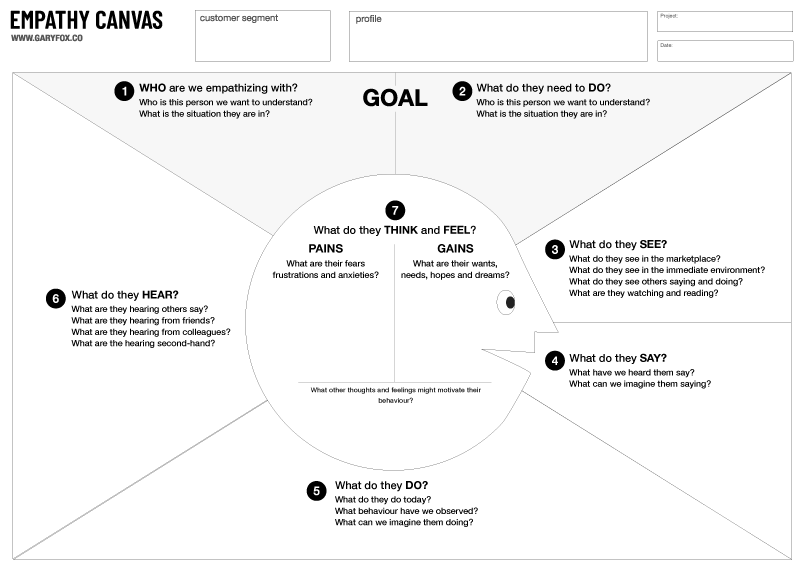
Alexander Osterwalder encourages people to also start without the customer! I personally recommend this as well.
Why? Because it quickly develops a customer-centric culture and starts the conversations within and across teams. Use ‘triggers’ to encourage people to question how things are done vs how things could be done. These are times for experimenting, not relying on knowledge that rapidly becomes dated and irrelevant.
The value proposition canvas and the business model canvas are both approaches that help to instil a mindset of reinvention – not always radical. Incremental innovative steps push a business forward and help it to maintain relevance in a market and sustain the growth of products and services.
Use Triggers
Digital transformation projects often get caught up in the internal focus and cost arguments without understanding how and where the customer fits in.
Triggers are essentially a way to reframe how you think about creating value.
- Imitate a pioneering model from another sector or industry.
- Take a new technology and think about how it could be used to change how a job is done.
- Think about how new partnerships could help create a new value proposition or transform an existing one.
- imagine a new product or service.
- create a new pain reliever based on a customer profile.
- create a new gain creator based on a customer profile.
Action
On post-it notes write down the customer jobs. Initially in your team or own your own write down your ideas and then filter afterwards.
Outcomes
Remember the first stage of the value proposition canvas is to create the Product-Solution fit.
- List of jobs to be done.
- Plan for further research plan with methods, timing and data required.
Step 2. Gains
The difference between gain creators and pain relievers is that gains are motivational and emotionally driven – outcomes. Pains are process and function-driven – obstacles/frustrations.
Gains need to be described as tightly as possible. They need to be detailed. Imagine for a moment that you are repeating back to a customer a ‘gain’. Write it down so that they would clearly identify with it. Remove jargon and buzzwords.
Gains are harder than pains to find. You can observe a pain, an obstacle, but understanding why someone wants to achieve a goal, a job, requires you to dig a bit deeper. To walk in the shoes of your customer.
Use the Customer Profile section of the value proposition canvas. Write down on post-it notes customer gains and categorize them based on the following:
- Required gains: These are the minimum requirements that a customer expects from a product or service.
- Expected gains: This is the basics – what a product or service needs to achieve to be of value to a customer. As an example, TV’s that are slim, well-designed, offer high-definition and connect to the internet – the gain is that you can stream video from lots of sources. Remember that the basics are set within an industry or context not just by your organization.
- Desired gains: These are the gains that a customer would love, that they desire, that they can articulate.
- Unexpected gains: These are the true innovations that create new ways of doing things and delight a customer. As an example, the first cars that had ever had integrated sat navigation, the first touch screen smartphones, the first app for hiring a ride – Uber (see Uber Business Model).
Questions to Help With Customer Gains
- What savings would make your customer happy? Be specific in terms of an amount or a percentage.
- What quality levels do they expect?
- What features do they expect?
- What positive social outcome do they?
Outcome
- A list of gains that are detailed and classified by relevance.
Step 3. Pains
Pains often go unnoticed. People just accept that this how things are done – how we do things. But customers change and competitors prey on weaknesses in products or services. They then act and evolve the value in the market, the offer which in turn ets new customer expectations. Prior to Apple introducing the touch screen, no other smartphone manufacturer needed to include it. After that moment everyone raced to add a touch screen but by that time market share is lost.
However, don’t discard the post-it notes with minor pains. Instead, group them up and see they form a theme. I often find that aggregating them can create a multiplier effect – often because they are inter-related and can be solved together and hence make a big step change.
Action: write down on post-it notes pains, one per note. Then categorize them. Some pains are minor, and not substantial. Of course, you want to focus on the big pains the ones that cause the workarounds, the headaches.
Types of pains
- Undesired outcomes, problems and characteristics:
- Outcomes are results that are unexpected. As an example, you book a car in for routine service and then go to pick it up. At the reception, you are given a bill for three things that the auto shop claimed needed doing. However, they didn’t call you or explain why or if they needed doing immediately.
- Problems are frustrations and annoyances that crop up while you are trying to do something. As an example, you book a table at a restaurant for 7pm. Upon arrival, you are told that you will have to wait because all the tables are busy. Fifteen minutes later no one has updated you and you are still waiting.
- Characteristics are features that may not be appealing either visually or functionally clunky. Examples include poor designs, bad signposting in a store, fonts on a website that are too small to read, running at the gym is boring, driving to work is unproductive time….each context will be relevant to different people.
- Obstacles: These are things that prevent people from getting things done or slow them down. As an example, your signup to try a new marketing platform. However, you need to integrate with it with your CRM system. You find out that the platform doesn’t support your CRM and it doesn’t have other possible integration possibilities like webhooks or Zapier.
- Risks: These are fears that could result from using something or prevent a customer from trying or adopting a new product or service. As an example, the fear of having to know code often prevents people from ever creating their own website.
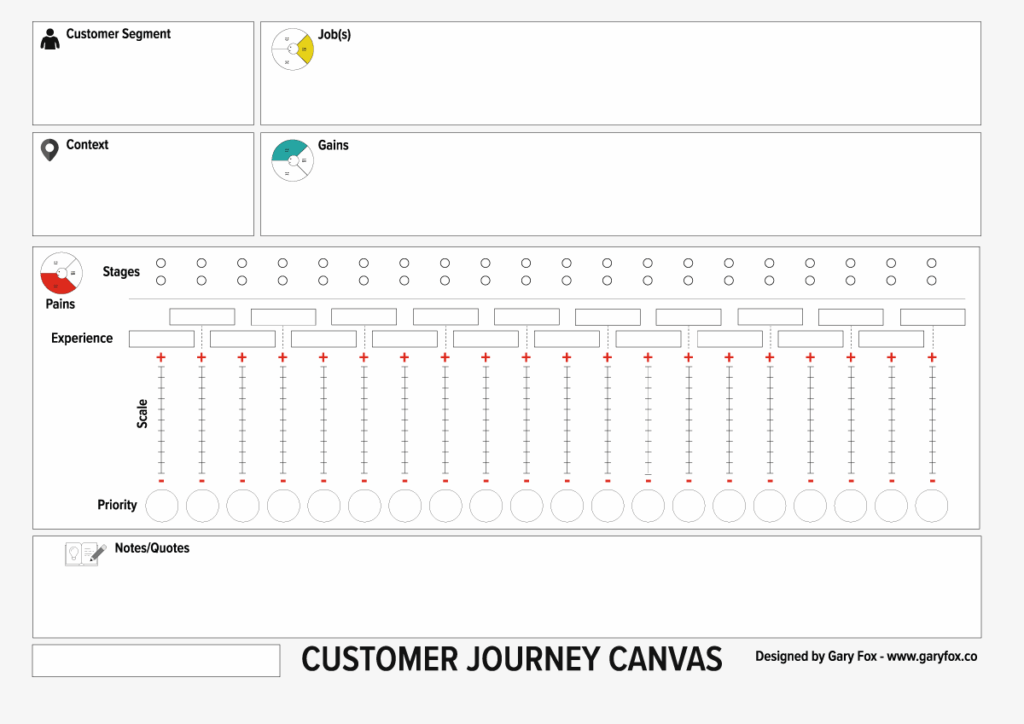
Bonus Tool 2: Use a customer journey map to find valuable insights into pains that customers experience.
Pain Severity
List your pains and then rank them on the severity scale. Extreme equals the highest level of pain and moderate the lowest. It doesn’t have to exact, but get a think about how they compare to each other.
Outcome
- A list of pains ranked by severity.
Step 4. Prioritizing Jobs, Gains and Pains
Bonus Tool 3: The Value Proposition Canvas – Rank Map.

The canvas above is the standard canvas you can use to map your results. However, I prefer to use the canvas below (both are included in the free template pack).
For the one below, rank jobs first according to importance – 2 stars being most important and then plot them on the axis.
I always find that teams intuitively prefer using the 4 x 4 matrix below more.

Outcome
- A list of the top gains and pains that are most important to a customer.
Step 5. Products and Services
The products and services part of the value proposition canvas is simply a list of what you offer.
Action: Place your post-it notes on the scale and move them up or down until you have them in order.
Depending on your product/service or business you want to focus on the top three to five.

Products and services also should include the supporting services that you offer to customers e.g. 24/7 phone line or instant chat.
Types of products and services
- Physical/Tangible: Physical products that you sell e.g. hairdryer, jeans, car…
- Intangible: Services that support your product e.g. training, after-sales support.
- Digital: Products and/or services that are digital e.g. Software as a Service, music downloads, reports as digital files…
- Financial: Products such as investment funds, insurance…
Create a list of the most relevant and rank them based on their relevance: essential vs. nice to have.
Outcome
- A list of what your product or service offers ranked on the value proposition canvas value scale above.
Step 6. Pain Relievers
Pain Relievers describe how your products and services alleviate the pains you noted earlier.
The exciting part of going through this as a process is that it quickly opens up new ideas for how you can innovate your current offers.
Some useful questions to ask:
- Could your products or services produce savings? If so how?
- Make your customers feel better?
- Can you put an end to difficulties and challenges?
- Eliminate customers fears?
- Eliminate barriers that prevent customers from trying or adopting your product?
Outcome
- A list of ranked pain relievers from essential to nice to have.
Step 7. Gain Creators
Gain creators describe how your products and services produce outcomes or benefits that customers value. They should connect directly to the prioritised gains in the Customer Profile.
Some useful questions.
Could your product or services:
- create savings that please your customers – money, time or effort?
- produce outcomes that exceed their expectations?
- outperform current value propositions?
- create positive social consequences?
- enhance the design and make it easier to use?
- help make adoption easier?
Outcome
A list of prioritised gain creators, ranked from essential to desirable.
Step 8. Mapping Fit
Bonus Tool 4: Mapping Fit Canvas

The last stage of the value proposition is to match pain relievers to pain and gain creators to gains.
Note: as a business, you can’t solve every pain. You ideally want to solve the pains and create gains that improve your offer, provide opportunities to increase the value or innovate.
Product Services and Customer Jobs Section
In the value proposition, canvas above, you have the top section with products/services and customers’ jobs.
Example question: Does our current products and services meet the required customer jobs? and how well?
Pains and Pain Relievers
Example questions:
- Which pain relievers do we offer? Do they adequately address the customer’s pains?
- What must we do to create pain relievers that we do not currently have?
Outcome
At this stage, you’re mapping the opportunities for the value proposition. Check that you are addressing what matters to customers and the logic and connection across the parts.
Step 9. Ideate and Explore
Striving to achieve a succinct and clear value expression is the goal, but you might need to order them – have one clear statement and then supporting ones that reinforce the main one.
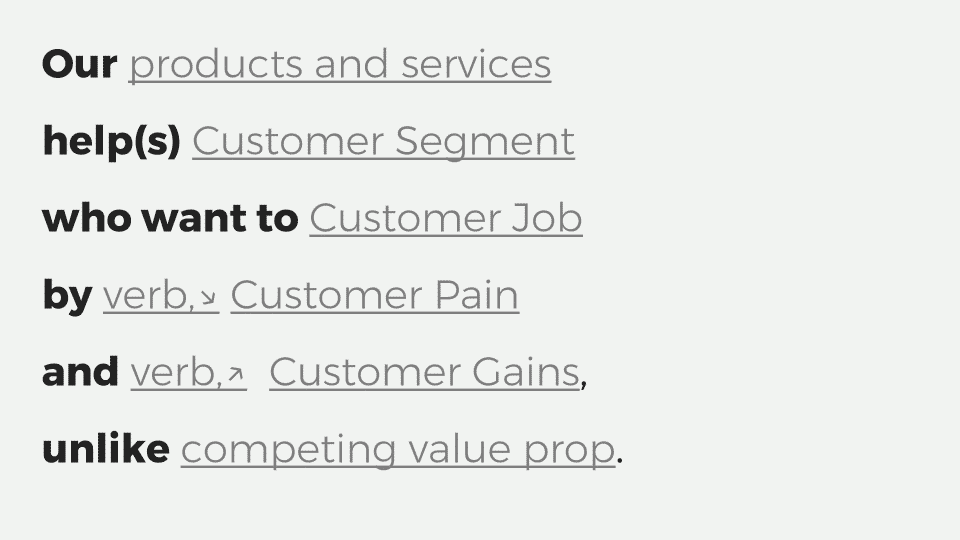
Value statement templates – Ad Libs
To distil your ideas and to reduce the clutter try using an ad-lib.
Sketch Ideas
You don’t have to be a designer to sketch ideas – simple diagrams/sketches no matter how you do them can ignite ideas and help move you forward.
A few guiding principles
Great value propositions have these characteristics:
- Focus on unsatisfied jobs, unresolved pains and unrealized gains.
- Target few jobs, pains and gains.
- Go beyond functional jobs and address social and emotional jobs.
- Align with how customers measure success.
- Differentiate themselves from the competition on jobs, pains and gains customers care about.
- Outperform the competition on at least one dimension.
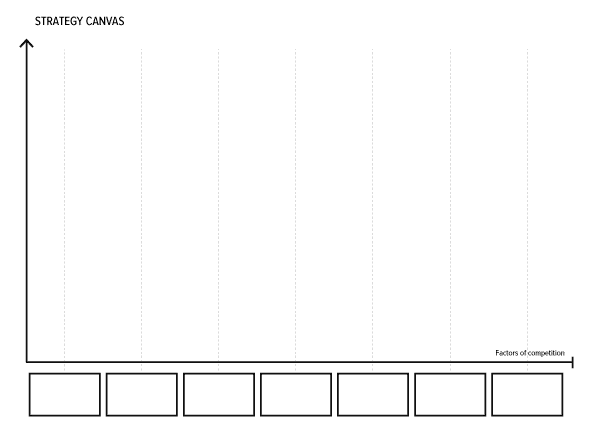
To see how your ideas shape up. List the value propositions along the x-axis on the strategy map and then map on the y-axis how your value proposition compares to 2-3 competitors.
Step 10. Test The Value Proposition
Once you have mapped the fit, specify what would prove or disprove your most important assumptions. A canvas records your reasoning; customer evidence determines whether it is sound.
Choose a test that matches the uncertainty. Interviews and observation can reveal whether a job matters. A clickable prototype can test comprehension and usability. A controlled pilot can test repeated use, adoption and willingness to pay. A landing page can test interest, but clicks alone do not establish demand.
Value Proposition Canvas Example: A Small Business Cash Flow Service
This is an illustrative example, not evidence from an actual customer study. Imagine a service designed for owners of growing small businesses who want to know whether they can cover upcoming payments without spending hours updating spreadsheets. Start with one segment, not every small business.
Customer Profile: What matters to the owner
- Customer jobs: decide whether upcoming wages and supplier bills can be paid; identify which customer invoices need chasing; make confident spending decisions.
- Pains: cash information spread across spreadsheets and banking tools, uncertainty about late payments, and too little time to update forecasts.
- Gains: an early warning of a possible shortfall, a clear view of priorities and greater confidence in decisions.
Value Map: A possible solution
- Products and services: a weekly cash flow view, invoice and expense summaries, scenario planning and an optional short adviser review.
- Pain relievers: bring relevant figures into one place, flag potential shortfalls and identify overdue invoices that may need action.
- Gain creators: make it easier to compare scenarios, decide what to chase or defer and communicate the situation to colleagues.
Check the fit: Match each promise to a customer need
The weekly forecast responds to uncertainty about upcoming payments. An overdue invoice view helps the owner decide whom to contact. Scenario planning supports spending decisions. If interviews show that invoicing is not the central pain, this offer needs to change. Do not treat every feature as valuable just because it is available.
Write a value proposition statement
For owners of growing service businesses who struggle to see whether they can meet upcoming payments, the proposed cash flow service brings invoices and expenses into a simple weekly forecast, flags possible shortfalls and helps them decide what action to take.
Validate the proposition before building it
- Research: interview owners about recent cash decisions, existing workarounds and the consequences of forecast errors.
- Prototype: use a sample dashboard with realistic but fictional data to test whether owners can identify a potential shortfall and an appropriate next action.
- Behaviour: offer a limited pilot and observe whether customers return and use the information.
- Economics: test what customers would pay, the cost of serving them and whether necessary data connections are feasible.
- Decision: refine, continue or stop based on evidence rather than enthusiasm for the concept.
Notice the distinction: the customer pains are hypotheses until confirmed by research; the proposed solution is a concept until tested; and a positive prototype reaction is not proof that customers will pay.
For related methods, see Jobs To Be Done and Business Model Innovation.
Putting the Value Proposition Canvas to Work
Start with a specific customer segment. Record what is known, what is assumed and what must be learned. Prioritise the jobs, pains and gains that matter most, then design a few alternative offers rather than forcing a fit around the first idea.
Use the completed canvas to guide customer conversations, prototypes and tests. The goal is not to fill every space with notes. It is to make better decisions about the value customers will recognise and the evidence needed to deliver it.
More Free Value Proposition Canvas Templates
Get These Free Pdf Templates
- Value proposition canvas – main template.
- Value proposition scale – value map and customer profile.
- Value proposition matrix – value map and customer profile.
- Value proposition – a day in the Life template.
- The Empathy Map – pdf template
- The Customer Journey Map – pdf template
- The Strategy Map
Questions Or Help
If you have any questions or need any help with using the value proposition canvas then get in touch via the contact page.
See also: Business Model Innovation.