
The Jobs to Be Done (JTBD) framework offers a customer-centric approach that delves into the underlying tasks, problems, or outcomes driving a customer’s decision to “hire” a product.
Understanding why customers choose certain products or services is essential for many roles within a company.
Why? At the heart of all successful companies is a relentless focus on the customer, whether it is a B2B or B2C customer; how firms create value is critical for long-term success.
Table of Contents
What Is Jobs To Be Done
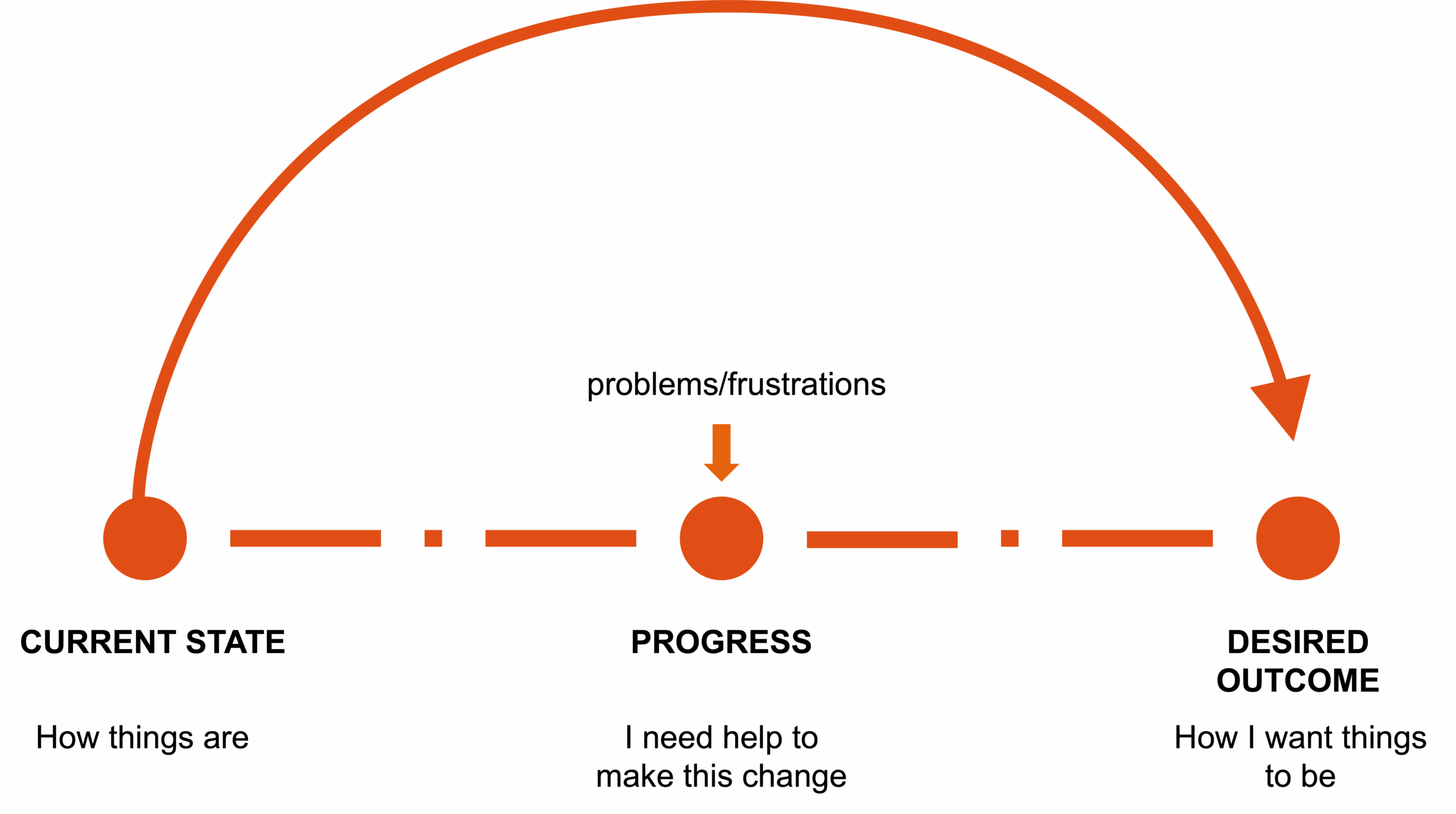
At its core, the Jobs To Be Done theory focuses on how and why customers “hire” products to fulfill functional, emotional, and social needs. A “job” represents a task or goal a customer wants to accomplish, encompassing different dimensions:
- Functional Needs: Practical aspects like solving a problem or completing a task.
- Emotional Needs: How the customer feels when performing the job, such as wanting to feel efficient or satisfied.
- Social Needs: How customers wish to be perceived by others, like appearing knowledgeable or stylish.
For example, purchasing a sports car isn’t just about transportation. It also satisfies emotional desires like excitement and social desires like gaining admiration.

A key principle of Jobs To Be Done is that the core job remains stable even as solutions and technologies change.
Consider the job of “listening to music“: this need has stayed the same for decades, while the solutions have evolved from vinyl records to streaming services.


This stability allows you to focus on long-term customer needs without getting sidetracked by changing trends.
Jobs To Be Done also adopts a solution-agnostic approach. It focuses on the outcome the customer wants, regardless of the means.
This mindset frees you to consider various solutions. For example, the job “find a convenient way to exercise regularly” could be addressed by gym memberships, home equipment, or fitness apps.
Who Should Adopt Jobs To Be Done Framework?
Product managers, marketers, designers, and executives all should understand adopt and understand the Jobs To Be Done approach – it should be a common way of understanding, discussing and focusing on the customer.
The Jobs to Be Done (JTBD) framework provides a way to examine customer motivations by focusing on the specific tasks or problems that customers aim to solve.
By identifying these “jobs,” you can develop solutions that more effectively meet real customer needs.
Product managers want to develop successful products that sell well and outperform the competition. By applying the JTBD framework, they can create offerings that align closely with customers’ goals, increasing the product’s appeal and competitive advantage.
Marketers need to position the product in a way that differentiates it in the market and so it resonates with the goals (needs) of the customer. JTBD frames how to think and craft messages that connect with the jobs customers need to accomplish. This connection leads to more effective and engaging marketing campaigns.
Designers need to create frictionless user experiences and match the flow of tasks and the overall goal of the customer. By understanding the jobs, they can design interfaces and interactions that make these tasks easier and more intuitive. This approach results in products that are more user-friendly and satisfying.
Executives focus on improving innovation outcomes of new products or services while reducing the risks associated with new product development. The Jobs To Be Done framework provides insights that help them to make strategic decisions grounded in customer needs. This strategy leads to more successful product launches and better allocation of resources.
Adopting the Jobs To Be Done framework fosters a common mindset and helps internal teams collaborate on product development projects.
The JBTD Framework

The Jobs To Be Done framework includes the follwoing components to understand customer motivations:
- Functional, Emotional, and Social Aspects: Identifying these helps create a complete view of why customers choose a product.
- Job Mapping: Breaking down a job into steps to understand the sequence and context of how a customer approaches it.
- Creating Job Statements: Using a structured format to define the job, such as: “When [situation], I want to [motivation], so I can [desired outcome].”
What Is Outcome-Driven Innovation (ODI)?
Tony Ulwick emphasises that the key to successful job mapping is to adopt an outcome-driven approach.
Each step of the job should be seen as an opportunity to deliver measurable outcomes that the customer values.
Ulwick suggests that you should aim to identify desired outcomes that are stable over time and use these insights to guide product development.
By using outcome statements, Ulwick’s approach helps to specify how customers measure success in each stage of the job.
An outcome statement typically includes a direction (increase, decrease, minimise), a metric (time, cost, effort), and an object of control (the specific aspect being addressed).
For example, a statement like “minimise the time to gather information for financial planning” pinpoints exactly how a customer would like to see their job improved.
Crafting a Job Statement: Key Elements and Method

A job statement is a concise expression of what a customer aims to achieve and provides a clear direction for product development and innovation.
To craft a detailed job statement incorporate these five components to gain a full understanding from the customer’s perspective. The formula is as follows:
Identifier + Action + Focus + Object + Context
To develop a job statement, begin with the Identifier, which defines the person or group for whom the job applies.
Then, identify the Action, describing the improvement or change the customer seeks.
The next step is to determine the Focus, which is the aspect of life or experience needing improvement.
After that, specify the Object that the action will directly affect.
Finally, outline the Context in which this job occurs, providing insight into the circumstances or situations relevant to achieving the desired outcome.
- Identifier: The person or group for whom the statement applies (customer segment)
- Action: The change or improvement the customer wants.
- Focus: The aspect of life or experience that needs improvement.
- Object: The item, product, or concept that the job aims to impact.
- Context: The situation or circumstances in which the job occurs.
10 Jobs To Be Done Statement Examples
Ten Examples of Job Statements
- Identifier: Environmentally-conscious homeowner | Action: Reduce | Focus: Environmental impact | Object: Household waste | Context: By composting food scraps at homeIdentifier: Office worker | Action: Increase | Focus: Productivity | Object: Daily task management | Context: By organising tasks digitally during work hours
- Identifier: Parent | Action: Enhance | Focus: Quality time | Object: Family bonding | Context: By planning weekend activities that involve all family members
- Identifier: Budget traveller | Action: Minimise | Focus: Cost | Object: Travel expenses | Context: By booking flights well in advance for upcoming trips
- Identifier: News reader | Action: Improve | Focus: Awareness | Object: Global events | Context: By reading concise news summaries during the morning commute
- Identifier: Busy professional | Action: Simplify | Focus: Daily meals | Object: Meal preparation | Context: By subscribing to a meal delivery service for weekday dinners
- Identifier: Fitness enthusiast | Action: Boost | Focus: Physical health | Object: Fitness routine | Context: By attending yoga classes weekly in the evenings
- Identifier: Young adult | Action: Monitor | Focus: Financial health | Object: Personal spending | Context: By using a budgeting app to track daily expenses
- Identifier: Project manager | Action: Optimise | Focus: Team communication | Object: Project collaboration | Context: By using an integrated platform for remote work
- Identifier: Student | Action: Maximise | Focus: Personal downtime | Object: Relaxation time | Context: By setting a screen time limit to balance study and relaxation
- Where does the customer experience frustration?
- What slows down or complicates the job?
- Are there any steps that require excessive effort?
How Do You Map Jobs To Be Done?

Job mapping is a systematic approach within the JTBD framework to break down a job into discrete steps, helping to understand the full process a customer undertakes to achieve a specific outcome.
It provides a view of each action, decision, and thought the customer experiences. This method shifts the focus from the product to the job itself, revealing unmet needs and pain points throughout the customer journey.
Unlike typical process mapping, job mapping outlines a customer’s journey in a solution-agnostic way.
It focuses on what the customer wants to achieve, regardless of any particular solution or product in use.
Tony Ulwick, a key proponent of the JTBD framework, emphasises this approach as critical to outcome-driven innovation. By identifying and addressing the steps customers take, you can design offerings that help customers achieve their desired outcomes more efficiently and effectively.
The Job Map: Eight Steps of Customer Action
- Define and Plan: Customer creates an initial approach to achieve their goal.
- Locate Input: Customer identifies and gathers necessary information for decision-making.
- Prepare: Customer organizes information, establishes theories, and decides on next steps.
- Confirm and Validate: Customer makes and validates their decision to act.
- Execute: Customer performs the chosen action or procedure.
- Monitor: Customer observes the effects and outcomes of their action.
- Modify: Based on new information, customer reassesses their decision and decides whether to continue, adjust, or start over.
- Conclude: Customer determines if their goal is achieved, evaluates their satisfaction, and learns from the experience.
How To Produce A Jobs To Be Done Job Map
A comprehensive job map consists of ten steps, offering a detailed look at each phase of the customer journey.
Each step represents an opportunity for businesses to understand, support, and enhance the customer experience as they progress towards completing their job.
- Define and Identify the Job: Customers start by defining what they want to achieve. This stage involves recognising the need or problem to be solved, which sets the context for the job. Ulwick highlights that clarity here helps uncover the customer’s true intent, which guides all subsequent steps.
- Trigger or Identify the Job to Be Done: This step involves the specific moment or situation that initiates the job. A trigger could be a problem, desire, or external event prompting the customer to act. Understanding the triggers helps businesses align their solutions to customer pain points and motivations.
- Locate and Gather Information: Once the need is defined, customers gather the necessary resources, information, or tools to accomplish their goal. This can involve research, product comparisons, or identifying required materials. Businesses can support this stage by providing accessible, clear information to help customers make informed decisions.
- Prepare and Organise: Before taking action, customers prepare by organising their resources or setting up the environment. This might involve filtering options, setting up devices, or assembling tools. Streamlining the preparation phase can improve the customer experience by reducing time and complexity.
- Verify and Confirm Resources and Plan: At this stage, customers validate that they have everything they need to execute the job and confirm their approach. They assess their readiness and confidence in moving forward. Ensuring easy access to verification tools or checklists can make this stage smoother.
- Execute and Take Action: This is the core stage where customers actively perform the main task. Execution involves carrying out the plan or using the product to achieve the goal. This step is where value is created for the customer, so solutions should focus on facilitating the job in a straightforward and efficient manner.
- Monitor Progress and Adjust as Needed: While executing the job, customers track their progress to ensure they are on the right path. They assess if their actions are effective and make adjustments as needed. Ulwick notes that solutions should provide feedback mechanisms to help customers stay on course and address any issues promptly.
- Modify and Make Decisions Based on Feedback: Based on the monitoring, customers may make adjustments to improve the outcome. This iterative stage requires customers to adapt their approach based on what they learn as they proceed. Tools that help refine and improve performance, such as step-by-step guidance or predictive support, can enhance this stage.
- Complete and Review the Outcome: After execution, customers assess whether the job was done successfully. This review involves reflecting on the outcome, learning from the experience, and identifying areas for future improvement. Businesses can support customers in this stage by offering follow-up resources, opportunities for feedback, or ways to maximise the job’s benefits.
- Conclude and Store Information for Future Jobs: Finally, customers wrap up their journey by concluding the job and storing any relevant information or knowledge for future use. This might include saving preferences, storing results, or archiving materials. Solutions that make it easy to recall past actions, replicate successful outcomes, or provide long-term benefits can improve customer retention and satisfaction.
The Jobs To Be Done Journey Navigator

The Jobs to Be Done (JTBD) Navigator is a strategic tool designed to guide organisations in understanding the complete journey a customer goes through to accomplish a particular job.
It provides a structured way to explore customer needs, motivations, pain points, and opportunities for innovation.
Purpose of the JTBD Navigator
The JTBD Navigator aims to give a comprehensive view of how a customer experiences a specific job, going beyond just the functional aspects to include emotional and social dimensions.
It helps to delve into not only what customers want to achieve but also how they feel throughout the process, what obstacles they face, and what criteria they use to judge success.
Key Components of the JTBD Navigator
The Navigator breaks down a customer’s journey into key components, typically aligning with a job map. These components may include:
- Triggers: What events, challenges, or needs prompt a customer to start the job? Understanding the trigger helps identify why a customer begins their journey and the urgency behind it.
- Desired Outcomes: What is the customer trying to achieve at each stage of the job? Defining these outcomes helps clarify what customers value most, both functionally and emotionally.
- Steps to Accomplish the Job: What actions does the customer take throughout their journey? Mapping out each step provides insight into where customers might struggle or require more support.
- Pain Points and Challenges: Where does the customer face obstacles or difficulties? Identifying pain points helps pinpoint opportunities for improvement or innovation.
- Success Metrics: How does the customer define success for each step of the job? Understanding success metrics helps shape the features and benefits a product should offer to meet customer expectations.
Applying the JTBD Navigator
To use the Navigator effectively, businesses typically start by conducting customer interviews or research to gather qualitative data about how the job is currently being done. The aim is to uncover not only the functional requirements of the job but also the emotional and social needs of the customer.
The insights from this research are then organised into the different stages of the job, aligning them with the components of the Navigator. This allows businesses to:
- Visualise the Complete Customer Journey: The Navigator helps teams see the journey from the customer’s perspective, making it easier to understand each stage’s goals, activities, and challenges.
- Identify Unmet Needs and Opportunities: By breaking down the journey, the Navigator highlights where current solutions fall short, providing opportunities for product improvements or new offerings.
- Align Teams Around Customer-Centric Solutions: Using the Navigator as a reference, cross-functional teams can align their efforts to design, develop, and market products that effectively meet customer needs.
Benefits of Using the JTBD Navigator
The JTBD Navigator is beneficial for businesses in several ways:
- Customer-Centric Focus: It ensures that all product development decisions are grounded in a deep understanding of the customer’s job and desired outcomes.
- Holistic View of the Job: The Navigator encourages businesses to consider all aspects of the customer journey, including functional steps and emotional or social needs.
- Structured Approach to Innovation: By providing a clear structure for mapping the customer journey, the Navigator allows teams to systematically identify areas for improvement, innovation, or differentiation.
An Example of the JTBD Navigator in Action
Consider a customer job like “preparing healthy meals quickly.” Using the JTBD Navigator, you would map out:
- the trigger (e.g., a need for quick, healthy food due to a busy schedule)
- the desired outcomes (e.g., meals that are nutritious, affordable, and quick to prepare)
- the steps to accomplish the job (e.g., finding recipes, buying ingredients, cooking, and serving)
- the pain points (e.g., lack of time, limited cooking skills, or recipe complexity).
The Navigator helps teams design solutions, like a meal kit service or an app with quick, healthy recipes, that aligns with the customer’s needs and experiences throughout the job.
Customer Criteria

Job mapping identifies the steps a customer takes to achieve a specific goal, highlighting their pain points and needs at each stage.
Once these steps are clear, it is important to understand the criteria customers use to evaluate potential solutions for their job.
This insight helps refine product development by ensuring that the solution not only fits the job but also meets the customers’ standards for value, quality, and convenience.
Challenges and Best Practices for Implementing JTBD
Innovation is fraught with risks so any methods that can reduce that risk are worth investing in. Often I find companies dismissive of the time and effort needed to align teams, train them and develop the right mix of people.
But here’s the dilemna – do you want to face the risk of failure and the cost of that is far greater than the cost of investing in Jobs To Be Done.
A staggering 95% of newly launched products face failure. Source MIT
Implementing JTBD can present challenges, especially when it comes to moving away from a feature-led mindset.
A common pitfall is focusing too narrowly on product features without considering the full context of the customer’s job, which includes emotional and social dimensions.
It’s easy to assume that adding more features will satisfy customers, but without understanding the job, these features may not address the underlying need.
Ensuring that research and development teams have a deep understanding of the job is vital to avoid this.
A best practice for implementing JTBD is to involve diverse stakeholders from across the business in the research process.
Cross-functional teams, including product managers, designers, marketers, and customer support, provide varied perspectives that help form a comprehensive understanding of the customer job.
Regularly iterating on job statements and re-evaluating the customer journey are also important, as this means you stay in touch with changing customer needs and adjust strategies accordingly.
Free Jobs To Be Done Templates
You can down the free jobs to be done templates here
Simply click the link below to get a zip file of all the templates
Jobs To Be Done


