
The hidden revenue business model involves generating income from third parties rather than directly from users, allowing companies to offer products or services for free or at a low cost.
This business model pattern separates revenue from customers, enabling rapid growth and monetization flexibility.
Key aspects include identifying target audiences, developing compelling offerings, finding potential third-party revenue sources, and creating a balanced ecosystem.
Table of Contents
The Hidden Revenue Business Model
What is the Hidden Revenue Business Model?
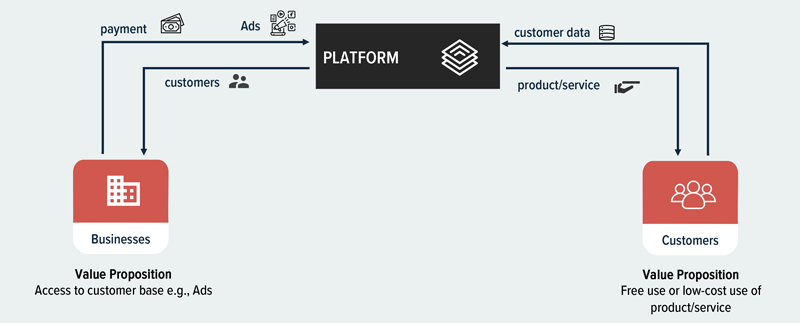
The hidden revenue business model is a strategy where a company’s main source of revenue comes from a third party, rather than directly from the users of its products or services. This third party essentially cross-finances the company’s offerings, allowing them to be provided to users for free or at a low price.
The most common example of this model is financing through advertisement, where the attracted customers are valuable to advertisers who fund the offering. This concept embodies the idea of ‘separation between revenue and customer’.
Why is the Hidden Revenue Business Model Important?
The hidden revenue business model is important because it offers several key benefits for companies and customers:
- Accessibility: By offering products or services for free or at a low cost, you can attract a large user base that might not have been willing or able to pay for a more expensive offering.
- Rapid Growth: The low barrier to entry for customers can lead to rapid growth and widespread adoption of your value offerings, creating a strong network effect and increasing the value of the platform for all parties involved.
- Monetization Flexibility: Separating revenue from customers allows you to experiment with different monetization strategies without directly impacting the user experience or pricing.
Hidden Revenue Business Model Example

The hidden revenue business model pattern primarily affects the following aspects of a firm’s business model:
- Revenue Streams: Revenue streams shift from users to third parties, such as advertisers, who are willing to pay for access to the firm’s user base or platform.
- Value Proposition: The value proposition for users centers around providing a high-quality product or service at a low cost or for free, while the value proposition for third parties revolves around access to a targeted, engaged audience.
- Customer Relationships: The company must foster strong relationships with both its users, to maintain a large and active user base, and its third-party revenue sources, to ensure a stable and profitable revenue stream.
How to Implement the Hidden Revenue Business Model
To successfully implement the hidden revenue business model, firms should follow these steps:
- Identify the Target Audience: Clearly define the target audience for the company’s offerings and understand their preferences, behaviors, and pain points. Use frameworks like the Value Proposition Canvas and Jobs To Be Done.
- Develop a Compelling Offering: Create a product or service that provides significant value to the target audience, addresses their needs, and encourages widespread adoption. Move from ideas to implementation and testing to validate ideas.
- Identify Potential Third-Party Revenue Sources: Identify third parties, such as advertisers or sponsors, who would be willing to pay for access to the company’s user base or platform.
- Create a Balanced Ecosystem: Develop a balanced ecosystem that provides value to all parties involved users, third-party revenue sources, and the company itself ensuring the long-term sustainability of the business model.
Hidden Revenue Business Model Examples
- Google: Google offers a wide range of free services, such as search, email, and maps, to users while generating revenue primarily through advertising.
- Facebook: Facebook provides a free social networking platform to billions of users worldwide, monetizing its user base through targeted advertising and sponsored content.
- Spotify: Spotify offers a freemium music streaming service, where users can listen to music for free with advertisements or pay for a premium subscription to access ad-free listening and additional features.
- TikTok: TikTok, a popular short-form video platform, allows users to create and share content for free while generating revenue through advertising, sponsored content, and partnerships with brands and influencers.
The hidden revenue business model has proven to be a powerful strategy for many large an global firms that have successfully scaled and gained large user bases.
By creating compelling offerings, identifying the right third-party revenue sources, and fostering a balanced ecosystem, you can also successfully implement this model, thrive, and scale your business.
Related Posts and Business Model Patterns
- Google Business Model – Strategy and Insights On The Internet Goliath
- Spotify Business Model: 3 Ways Its Transforming Audio
- Freemium Business Model
- Digitalization vs Digitization
- Digitization Business Model
- Subscription Business Model