This article explores the confusion between Digitalization vs Digitization. I’ll explain the difference between Digitalization vs Digitization and also discuss it in terms of digital transformation.
Table of Contents
Introduction
The terms “digitization,” “digitalization,” and “digital transformation” are often used interchangeably, leading to confusion. This post explains the key differences between Digitalization and Digitization.
Understanding Digitalization vs Digitization, and Digital Transformation
Understanding the difference between digitization and digitalization is essential because these concepts are at the root of many of the big transformational changes we have witnessed in the economy.
Defining these terms creates a simple but effective way to understand more complex principles, such as how digital technologies create value.
In simple terms, digitization refers to the process of converting analogue information into digital formats.
Digitalization continues to broadly impact innovation, operational efficiency, and competitive advantage.
For example, information on machine performance, hours used, and output etch is traditionally captured but is now being digitized, which fuels the transition to Industry 4.0.
The strategic impact of digitization is operational mainly, improving efficiency and data management. However, changing activities and automating processes also present opportunities for business model innovation.
Digitalization refers to business model transformation, innovation, and how firms can gain a sustained competitive advantage.
In this article, I will demystify these terms, explore their strategic implications, and examine how digitization and digitalization are the foundation for digital transformation.
What is Digitization?
Digitization refers to the conversion of analogue information into digital format. It involves taking physical products, processes, or data and transforming them into a digital format that can be easily stored, accessed, modified, shared, analyzed, and transferred.
Some examples of digitization include:
- Scanning documents into PDF files
- Encoding music into MP3 files
- Taking photos and videos and storing them digitally
- Creating 3D digital models from physical objects using scanners
Why Digitization Matters
| Physical vs Digital | Physical | Digital |
| Cost | High production and distribution costs | Low marginal costs to reproduce and distribute |
| Changeability | Difficult to update/modify | Can be easily edited, customized, updated |
| Distribution | Limited reach and accessibility | Available globally via internet |
By digitizing products, firms can lower production and distribution costs, easily update offerings, and reach broader markets.
This can transform traditional business models focused on selling physical products to new subscription and as-a-service models.
Some key concepts changed by digitization include fixed vs. editable products, global vs. local distribution, and lower cost structures.
Digitization lays the groundwork for technological innovation, making data shareable and reusable across platforms, thus spurring new service models and product development.
It represents the first step in leveraging information as a strategic asset, paving the way for digital transformation and new competitive advantages in the digital era.
What is Digitalization?
Digitalization involves adopting digital technologies, infrastructure, and capabilities to improve processes, functions, and business models.
It’s about leveraging digitization through analysis, connectivity, and intelligence.
Some examples include:
- Using sensors, IoT, and data analytics to gain operational insights
- Implementing e-commerce platforms and digital payment systems
- Automating processes with AI and machine learning
- Building digital ecosystems and platform business models
The Business Impact of Digitalization
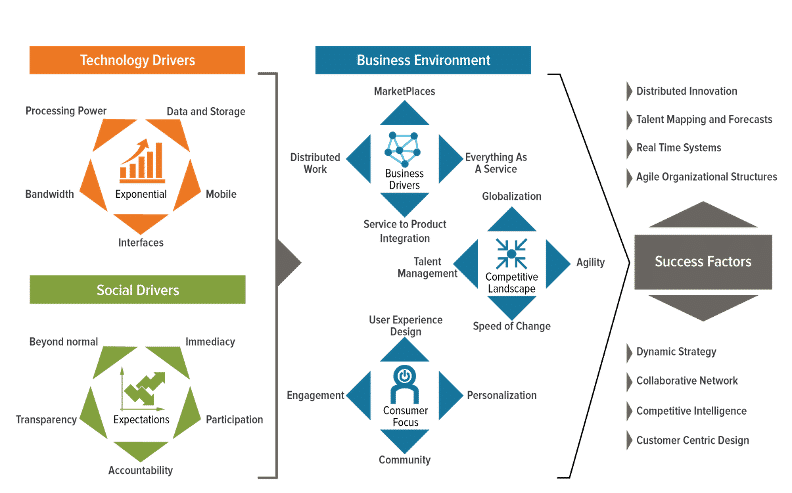
Key ways digitalization changes business concepts:
- New data-driven business models: Companies leverage data and analytics to offer insights “as-a-service”
- Increased automation: Manual processes converted to automated using AI/ML, boosting efficiency
- Connected ecosystems: Integration of systems and partners via APIs and cloud platforms
- Hyper-personalization: Digitized customer data enables customized offerings
- Digital innovation culture: Rapid experimentation and iteration with digital tools and data
Digital Transformation
While digitization and digitalization focus on technologies, transformation focuses on aligning the organization, processes, and culture to new digital capabilities.
It requires changes in leadership mindsets, workplace environments, employee skills, and more.
Definition of Digital Transformation
Digital transformation is integrating digital technology into all aspects of a business, fundamentally changing how it operates and delivers value to customers.
It goes beyond simply adopting new technologies; it requires a cultural shift that challenges the status quo, encourages experimentation, and embraces failure as a learning opportunity.
Digital Business Models
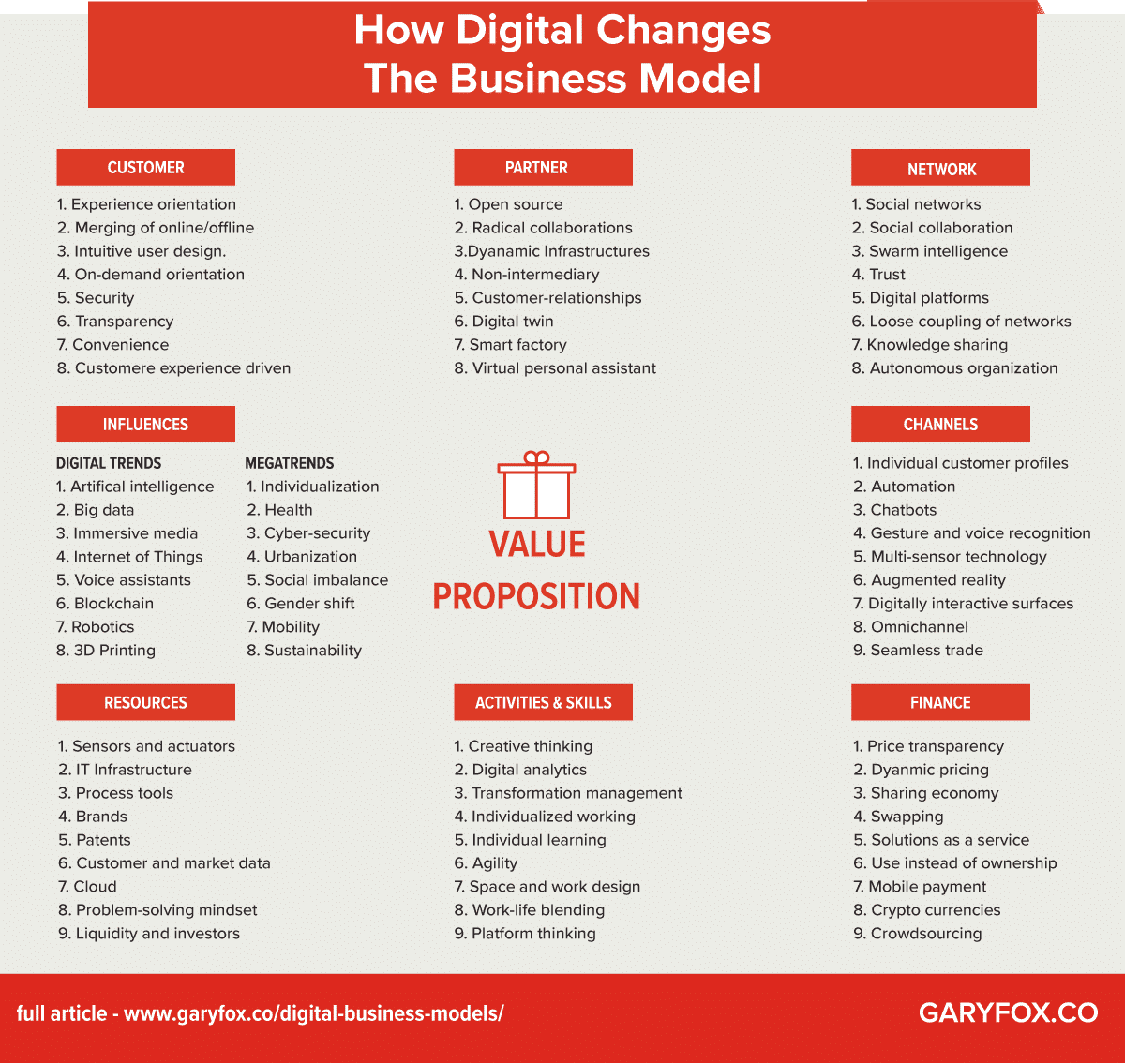
Digitalization and digitization also change the traditional perpective of the business model. Digital business models disrupt traditional business frameworks by using technology to create new value, improve customer experiences, and streamline operations.
Unlike older models, which depend on physical assets and linear processes, digital models harness data, platforms, and technology to scale, adapt, and respond quickly to market shifts. This shift introduces new revenue sources, operational efficiencies, and a customer-centric focus, helping businesses stay competitive in the evolving digital landscape.
Key Takeaways on Digital Business Models
- Rapid Scalability: Digital platforms enable businesses to grow and adapt to market changes faster than traditional models.
- Data-Led Decisions: Access to real-time data drives smarter decisions, allowing for customisation and improved offerings.
- Customer Experience: Digital tools create more engaging and personalised customer interactions through apps, social media, and online platforms.
- New Revenue Models: Digital models offer ways to generate income, such as subscription services and digital marketplaces.
- Improved Efficiency: Automation and digital workflows reduce costs and increase efficiency across operations.
- Global Market Access: Digital business removes geographic barriers, enabling companies to serve customers globally.
- Platform Ecosystems: Digital models foster ecosystems where stakeholders collaborate and drive further innovation.
- Agility and Innovation: The fast-paced digital environment demands continuous innovation and rapid business adjustments.
Digitalization vs Digitization vs Digital Transformation

| Comparing digitalization vs digitization, and digital transformation | Digitization | Digitalization | Digital Transformation |
| Focus | The technical process of converting analogue to digital | Adoption/application of digital technologies | Organizational changes to thrive as a digital business |
| Example | Scanning documents to digitize records | Using e-signatures to approve documents online | Developing a paperless workflow |
| Scope | Foundational enabler | Business function specific | Company-wide initiatives |
| Outcome | Digital artifacts and data | Improved efficiency, data insights, automation | Sustained ability to compete as a digital business |
Digital transformation is a holistic approach that encompasses changes in strategy, business models, operations, and organizational culture, ultimately creating new value propositions and improved customer experiences.
Digitization provides data that enables digitalization, which then requires company-wide organizational transformation.
- Redefining business processes and operations to leverage digital technologies
- Developing new digital products, services, and revenue streams
- Enhancing customer engagement and experiences through digital channels
- Fostering a culture of innovation, agility, and continuous learning
- Aligning digital initiatives with overall business strategy and objectives
Drivers of Digital Transformation
The rapid pace of technological advancement, particularly in artificial intelligence, the Internet of Things, and blockchain, is an essential driver of digital transformation.
As these technologies create new opportunities for innovation and disruption, organizations must adapt to remain competitive.
Changing customer expectations and behaviour also play a significant role, with consumers increasingly demanding personalized, seamless, and digital-first experiences.
Additionally, the threat of competition from digital-native companies and the need for operational efficiency and cost reduction are compelling reasons for traditional businesses to embrace digital transformation.
- The emergence of disruptive technologies (AI, IoT, blockchain, etc.)
- Shifting customer preferences towards digital experiences and personalization
- Intensifying competition from digital-native companies and startups
- Need for greater operational efficiency and cost optimization
- Globalization and the need to scale rapidly in new markets
- Regulatory changes and compliance requirements (e.g., data privacy laws)
- Changing workforce demographics and expectations (e.g., remote work, digital skills)
Key Components of Digital Transformation
Business Model Innovation
Business Model Innovation: Digital transformation often requires organizations to rethink their business models to capitalize on the opportunities presented by digital technologies.
This may involve creating new revenue streams, developing innovative value propositions, or completely redesigning the company’s operations.
The Netflix business model transitioned from a DVD rental service to a streaming platform is a prime example of successful business model innovation in the digital age.
- Identifying new digital revenue streams and pricing models
- Developing platform-based or ecosystem-driven business models
- Leveraging data and analytics to create new value propositions
- Transitioning from product-centric to service-oriented offerings
- Exploring opportunities for business model disruption in the industry
Customer Experience Enhancement
Digital technologies offer unprecedented opportunities to enhance customer interactions and engagement.
By leveraging data-driven insights, organizations can personalize experiences, provide omnichannel support, and proactively address customer needs.
Starbucks’ mobile app, which enables ordering, payment, and loyalty program management, demonstrates how digital transformation can elevate the customer experience.
- Developing seamless, omnichannel customer experiences across digital and physical touchpoints
- Personalizing interactions and offerings based on customer data and preferences
- Implementing AI-powered chatbots and virtual assistants for 24/7 customer support
- Leveraging social media and digital platforms for customer engagement and feedback
- Continuously monitoring and optimizing customer journeys and satisfaction metrics
Streamlining and automating processes through digital tools can significantly improve efficiency, productivity, and agility.
Operational Process Optimization
Leveraging technologies such as AI and IoT can help organizations optimize operations, reduce costs, and make data-driven decisions.
UPS’s use of these technologies for route optimization and predictive maintenance showcases the potential of digital transformation in operational process optimization.
- Automating repetitive tasks and processes using AI and robotic process automation (RPA)
- Implementing IoT sensors and devices for real-time monitoring and predictive maintenance
- Leveraging big data and analytics for demand forecasting and inventory optimization
- Adopting cloud computing for scalability, flexibility, and cost efficiency
- Streamlining supply chain processes through digital platforms and blockchain technology
Organizational Culture and Talent Development
Cultivating a digital-first mindset and an agile work environment is essential for successful digital transformation.
This requires attracting and retaining top digital talent and upskilling the existing workforce to meet the demands of the digital age.
Walmart’s digital talent incubator and acquisition of e-commerce companies exemplify the importance of investing in organizational culture and talent development.
- Fostering a culture of experimentation, innovation, and continuous learning
- Implementing agile methodologies and cross-functional collaboration
- Attracting and retaining digital talent through competitive compensation and benefits
- Providing ongoing training and development opportunities for digital skills
- Encouraging a data-driven decision-making culture across the organization
Digital Transformation Approach and Stages
Digital transformation is a complex, iterative process that demands a holistic approach focusing on four key areas: strategy, culture, capabilities, and organization.
Aligning digital initiatives with overarching business goals is crucial to ensure that investments in digital technologies deliver tangible value.
As organizations progress through the stages of digital maturity, from early experimentation to full-scale transformation, they must continually assess their capabilities across dimensions such as customer engagement, technology, operations, and organization.
Building the right approach to innovation and value creation requires a combination of strategic vision, organizational agility, and a culture of continuous learning and experimentation.
- Developing a clear digital transformation strategy aligned with business objectives
- Assessing current digital maturity and identifying gaps and opportunities
- Prioritizing initiatives based on potential impact and feasibility
- Establishing governance structures and metrics to monitor progress and success
- Fostering a culture of innovation, agility, and continuous improvement
- Building internal capabilities and partnerships to support digital transformation efforts
Strategic Implications of Digital Transformation
To successfully navigate digital transformation, managers must develop a clear strategy that aligns digital initiatives with business objectives, prioritizes investments based on impact and feasibility, and considers future trends.
Fostering a digital-first culture that encourages experimentation, innovation, and calculated risk-taking is essential, as is promoting collaboration and breaking down organizational silos.
Investing in digital talent and capabilities by upskilling the existing workforce and attracting new talent is critical to building the necessary foundation for transformation.
Adopting agile and lean methodologies, such as iterative development and rapid prototyping, can help organizations become more responsive to change.
Leveraging data and analytics to inform decision-making and personalize customer experiences is another key aspect of successful digital transformation.
Finally, collaborating with ecosystem partners, including startups, technology providers, and industry peers, can open up new opportunities for co-innovation and strategic partnerships.
- Communicating a clear vision and roadmap for digital transformation
- Aligning digital initiatives with overall business strategy and objectives
- Prioritizing investments based on potential impact and ROI
- Encouraging a culture of experimentation, innovation, and calculated risk-taking
- Breaking down organizational silos and promoting cross-functional collaboration
- Investing in digital talent acquisition, retention, and development
- Implementing agile methodologies and continuous improvement processes
- Leveraging data and analytics for informed decision-making and personalization
- Establishing strong data governance, privacy, and security practices
- Actively seeking partnerships and collaboration opportunities with external stakeholders
Final Thoughts
In my experience, digital transformation is not without its risks and challenges.
One of the most critical aspects that can derail a digital transformation initiative is the lack of a clear vision and strategy.
Digital transformation projects failure rates are between between 66% and 70%.
Source: AIS
McKinsey, for example, reports a 70% failure rate, suggesting that many organisations struggle to successfully implement their digital initiatives.
The primary reasons often relate to overemphasising technology while neglecting organisational change, misalignment of objectives, and lack of digital talent or clear leadership.
Without a well-defined roadmap that aligns with the organization’s overall goals, it’s easy to lose focus and invest in technologies or initiatives that fail to deliver value.
To mitigate this risk, I strongly recommend thoroughly assessing your current digital maturity, identifying gaps and opportunities, and developing a comprehensive strategy that prioritizes initiatives based on their potential impact and feasibility.
Another key risk to consider is resistance to change from within the organization.
Digital transformation often requires significant shifts in processes, roles, and culture, which can be met with scepticism or employee pushback.
In my experience, engaging employees early in the process, communicating the benefits of digital transformation, and providing adequate training and support can help mitigate this risk.
It’s also crucial to foster a culture that encourages experimentation, innovation, and calculated risk-taking, as this can help overcome the fear of failure that often hinders digital transformation efforts.
Data privacy and security concerns are also critical risks to assess and manage. As organizations collect and leverage increasing amounts of customer and operational data, ensuring the proper governance, privacy, and security measures are in place is paramount. I recommend establishing clear policies and procedures for data management, investing in robust security technologies and practices, and regularly auditing and updating your data protection measures to stay ahead of evolving threats.
Finally, I’ve seen many organizations struggle with the complexity and pace of digital transformation. It’s essential to recognize that digital transformation is an ongoing journey, not a one-time event.
To navigate this complexity, I advise adopting an agile, iterative approach that allows for continuous learning, adaptation, and improvement. This may involve starting with smaller, pilot projects to test and refine your approach before scaling up, as well as regularly reassessing your progress and adjusting your strategy as needed.
By remaining flexible and open to change, organizations can better navigate the risks and challenges of digital transformation and unlock the full potential of digital technologies for their business.