I’ll delve into the unique Patagonia business model and uncover the story of a company that has successfully balanced profit with purpose.
Table of Contents
How Does Patagonia’s Business Work
Patagonia designs, manufactures, and retails high-quality outdoor clothing and gear.
The Patagonia business model focuses on producing durable, functional, and environmentally friendly clothes. I’ve personally brought several Patagonia and can vouch for their quality.
The main products cater to the needs of outdoor enthusiasts, but many other people support their purpose.
Patagonia sells its products through its retail stores, online store, and selected wholesale partners. In line with its focus on sustainability, it also offers repair services to extend the life of its products.
What attracts people to Patagonia is its commitment to sustainability. This is evident throughout its supply chain, from sourcing materials to manufacturing processes and product end-of-life management.
Key Facts About Patagonia
Patagonia
Yvon Chouinard
1973
1973
Ryan Gellert (as of September 2020)
Ventura, California, USA
Estimated 3,000
Privately held.
$209.1 million
estimated profit is around $100 million
Patagonia is privately held
A Brief History of Patagonia
Patagonia was founded in 1973 by Yvon Chouinard, an accomplished rock climber and environmentalist.
Initially, the company focused on producing climbing gear, building upon Chouinard’s earlier venture, Chouinard Equipment.
In the early years, Patagonia’s innovative designs, such as aluminium chocks and polypropylene long underwear, gained popularity among climbers and outdoors enthusiasts.
Key milestones in Patagonia’s history include:
- 1973: Patagonia is officially founded by Yvon Chouinard.
- 1977: The company introduces its first outdoor clothing line, including the iconic Pile Jacket.
- 1985: Patagonia begins using organic cotton in its products, becoming a pioneer in sustainable textile sourcing.
- 1988: The company commits to donating 10% of its profits to environmental organizations, formalizing its “1% for the Planet” initiative.
- 1996: Patagonia launches its “Common Threads” program, encouraging customers to repair, reuse, and recycle their garments.
- 2002: The company became a certified B Corporation, reflecting its social and environmental responsibility commitment.
- 2012: Patagonia introduces its “Worn Wear” program, offering repairs and second-hand clothing to extend product life.
- 2018: The company changes its mission statement to “We’re in business to save our home planet.”
Throughout its history, Patagonia has remained committed to its core values of quality, sustainability, and environmental activism while continuously innovating in product design and business practices.
Useful Links for Patagonia









Who owns Patagonia
As of August 2023, Patagonia is owned by the Holdfast Collective, a non-profit organization created by Yvon Chouinard and his family to ensure the company’s continued commitment to environmental activism and social responsibility.
In September 2022, Chouinard announced that he and his family had transferred their ownership of Patagonia, worth about $3 billion, to two entities: the Patagonia Purpose Trust, which owns 2% of the company’s stock and all of its voting rights, and the Holdfast Collective, which owns the remaining 98% of the company’s stock.
This ownership structure allows Patagonia to continue operating as a for-profit business while ensuring its profits are used to combat climate change and support environmental causes.
Patagonia Mission statement
“We’re in business to save our home planet.”
How Patagonia works
The Patagonia business model centres on designing and manufacturing high-quality outdoor clothing and gear. Its focus is on durability, functionality, and minimal environmental impact.
Patagonia sources its materials responsibly, using organic cotton, recycled polyester, and other eco-friendly fabrics. The company also partners with suppliers who share its commitment to fair labour practices and environmental stewardship.
Patagonia sells its products through a multi-channel approach, including its retail stores, online store, and selected wholesale partners.
The company’s retail stores serve as sales channels and community hubs for outdoor enthusiasts and environmental activists. Patagonia’s online platform offers various products and services, including customization and repair guides.
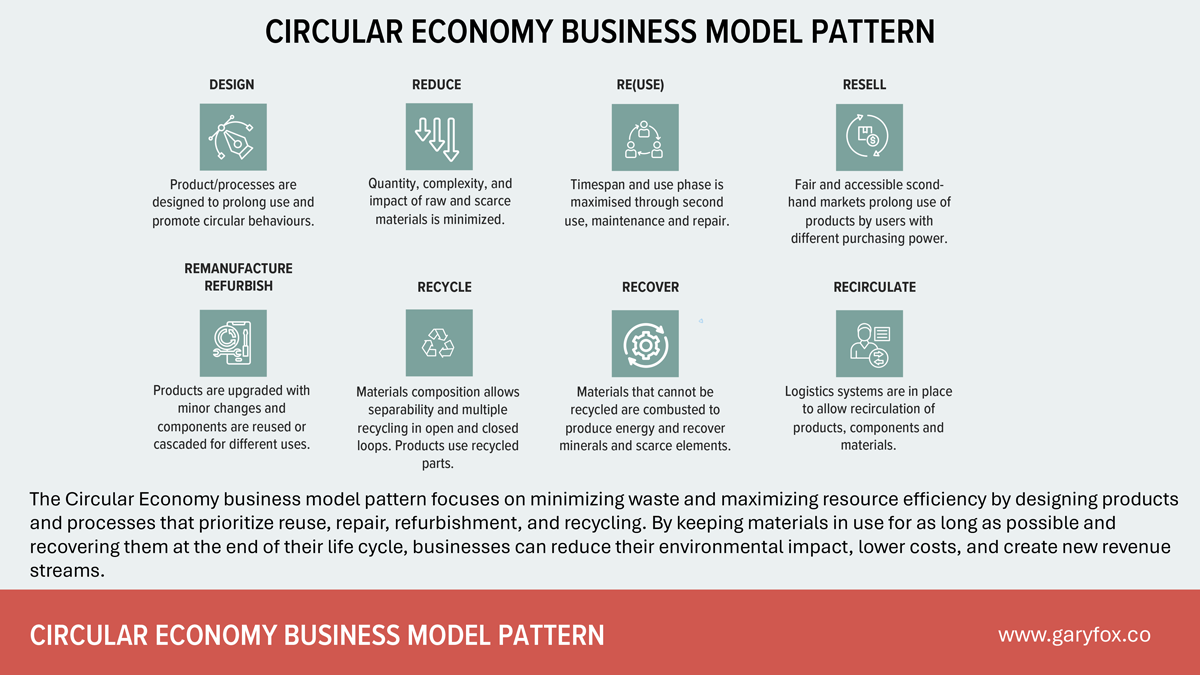
The company offers a comprehensive repair service for its products, encouraging customers to extend the life of their garments and gear. Patagonia also operates a “Worn Wear” program, which sells second-hand and reconditioned Patagonia products, and uses a circular business model .
The Patagonia business model also strongly emphasizes environmental activism and social responsibility. Through its “1% for the Planet” initiative, the company donates 1% of its sales to environmental organizations and actively supports grassroots environmental campaigns.
Patagonia also uses its platform to raise awareness about environmental issues and advocate for policy changes that protect the planet.
See the circular economy business model for more details.
The Revenue Model of Patagonia
The Patagonia revenue model consists of:
- Product sales: Patagonia’s primary source of revenue is the sale of its outdoor clothing and gear through its retail stores, online platform, and wholesale partners.
- Repair services: Patagonia offers repair services for its products, generating revenue while promoting product longevity and sustainability.
- Worn Wear program: The company’s second-hand and reconditioned clothing program generates revenue while supporting a circular economy.
- Licensing and collaborations: Patagonia occasionally collaborates with other brands or licenses its trademarks, generating additional revenue streams.
What is Patagonia’s Business?
Patagonia’s competitive advantages include its strong brand reputation, loyal customer base, eco-friendly materials and manufacturing processes, and unique business model, which prioritizes environmental and social responsibility over short-term profits.
Key Features of the Patagonia Business Model
- Focus on sustainability and environmental responsibility
- High-quality, durable, and functional outdoor clothing and gear
- Multi-channel sales approach, including retail stores and online platform
- Emphasis on product longevity and repair services
The Patagonia Business Model
I’ve produced the Patagonia business model canvas below as an overall summary.


Patagonia Customer Segments
The Patagonia business model caters to a diverse range of customer segments. The company’s high-quality outdoor apparel and gear appeal to various groups of consumers who value sustainability, functionality, and durability. Patagonia’s customer segments include:

Patagonia Value Proposition
The Patagonia business model offers a unique value proposition to its customers. The company’s products and services combine quality, functionality, and sustainability, setting it apart from competitors. Patagonia’s main value propositions include:

Patagonia Channels
The company employs a multi-channel approach to ensure its products and services are easily accessible to its target audience. Patagonia’s main channels include:

Patagonia Customer Relationships
The Patagonia business model prioritizes building strong, long-lasting relationships with its customers. The company focuses on creating a sense of community and shared values around sustainability and environmental activism. Patagonia’s customer relationships are characterized by:

Patagonia Key Activities
Patagonia’s business model revolves around key activities that drive its value creation and delivery. These activities ensure the company consistently meets customer needs while adhering to its sustainability principles. Patagonia’s key activities include:

Patagonia Key Resources
The Patagonia business model relies on a set of key resources to create and deliver value to its customers. These resources form the foundation of the company’s competitive advantage and enable its sustainability-driven approach. Patagonia’s key resources include:

Patagonia Key Partners
Patagonia’s business model involves collaboration with a network of key partners. These partnerships enable the company to maintain its commitment to sustainability, access specialized expertise, and amplify its impact. Patagonia’s key partners include:

Patagonia Revenue Streams
Patagonia’s business model generates revenue through several key streams. The company’s focus on quality, sustainability, and customer loyalty allows it to maintain a profitable and resilient business. Patagonia’s main revenue streams include:

Patagonia Cost Structure
The Patagonia business model incurs various costs to maintain its operations and deliver customer value. The company must manage these costs effectively to ensure profitability while adhering to its sustainability principles. Patagonia’s main cost components include:
The Future of Patagonia Business Model
There is an overall shift and greater pressure to move toward more sustainable and circular practices. Many other brands are beginning to change, but there is still a long way to go. Patagonia has been a leader, not a follower, in this way.
The Patagonia business model will remain rooted in its sustainability and environmental activism values. The company’s recent transition to a new ownership structure, with the Holdfast Collective and Patagonia Purpose Trust, enables it to use profits to combat climate change and supporting environmental causes.
Moving forward, Patagonia will innovate its product offerings by exploring new materials and technologies that minimize environmental impact. The company may also expand its repair and recycling services, encouraging customers to extend the life of their products and reduce waste.
Patagonia’s commitment to environmental activism is expected to grow stronger, support grassroots initiatives, advocate for policy changes, and raise awareness about pressing environmental issues. Patagonia can inspire a new generation of environmentally conscious consumers by engaging its customers and the broader public in these efforts.
As the demand for sustainable and ethically produced goods continues to rise, the Patagonia business model is a powerful example of how companies can prioritize purpose alongside profit.


